Any Questions?
We are ready to answer all your questions. Just fill the form and we will call you soon.
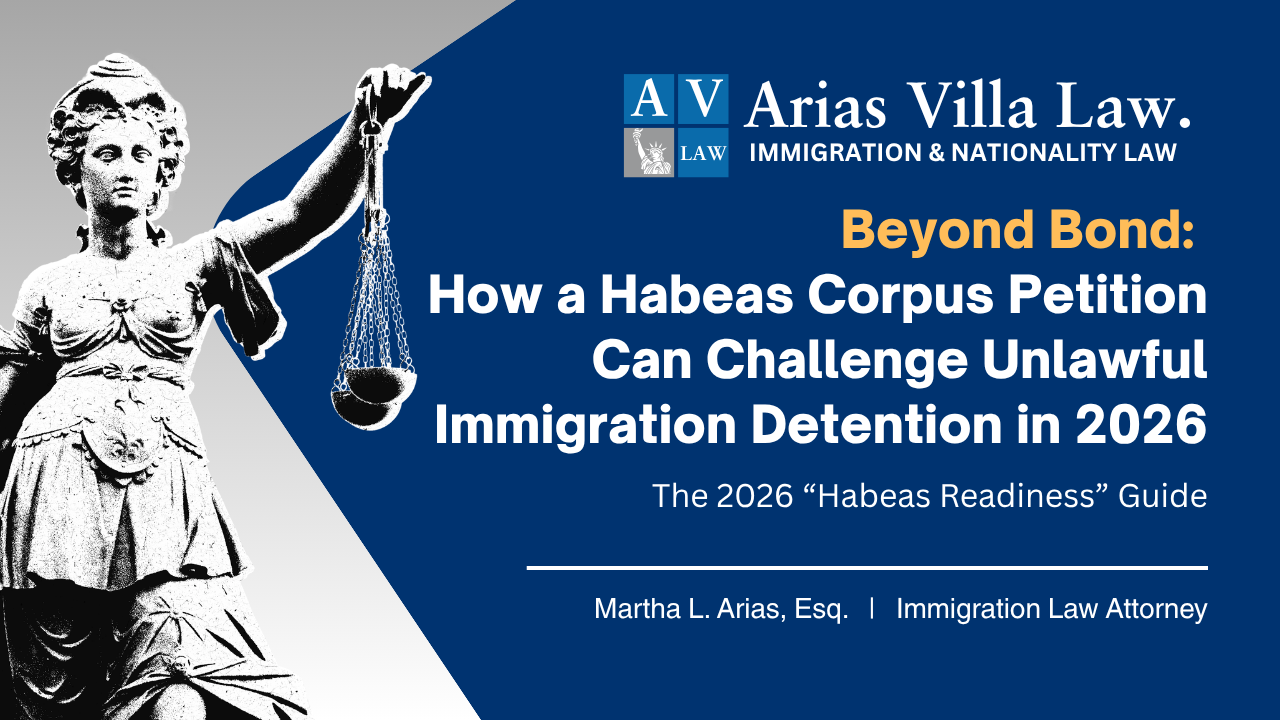
The legal landscape for immigrants in the United States has shifted dramatically in early 2026. Following the March 26, 2026, Eighth Circuit ruling and various administrative enforcement priorities, many individuals who were previously eligible for bond are now finding themselves in “mandatory detention.” This shift has created a crisis where families are told by Immigration Judges (IJs) that their hands are tied by statute. When the Immigration Judge says “no bond” because of a perceived lack of jurisdiction, many families feel they have reached a dead end. However, there is a powerful constitutional tool that exists outside the immigration court system: The Writ of Habeas Corpus.
As we navigate the complexities of 2026 enforcement, it is vital to understand that the Executive Office for Immigration Review (EOIR) is not the final word on your physical liberty. While an immigration court is an administrative body under the Department of Justice, the U.S. District Court is a separate, independent judicial branch. By filing a petition under 28 U.S.C. § 2241, we move your case into a forum where the U.S. Constitution—specifically the Due Process Clause—takes center stage over restrictive administrative policies.
A Writ of Habeas Corpus is a federal court filing submitted to a U.S. District Court that challenges the government’s legal authority to hold a person in custody. Known as the “Great Writ,” it is a centuries-old legal protection designed to prevent the government from holding individuals indefinitely or without a valid legal reason. In the 2026 immigration climate, this is becoming the “last line of defense” for several specific groups of people:
At Arias Villa Law, we utilize Habeas Corpus to bypass the bottlenecks of the immigration agency. While a USCIS or ICE officer might follow a rigid manual, a Federal Judge follows the Constitution. This distinction can be the difference between months of detention and returning home to your family.
As of late March 2026, the intersection of new technology and shifting policies has created a “perfect storm” for detainees. With the recent conclusion of TPS for certain regions and the 2026 “Digital First” vetting initiatives, USCIS and ICE have increased the use of detentions based on “automated risk flags.” These flags are often generated by AI algorithms that scan digital history, social media, and travel patterns. Because these flags are frequently based on errors or outdated information in digital footprints, they can trigger a “mandatory hold” before a human officer even reviews the file.

Furthermore, the 2026 judicial environment has seen several “pro-detention” rulings that limit the power of Immigration Judges to grant bond to “arriving aliens” and those with reinstated removal orders. This has led to a surge in individuals being held in facilities like Krome or Broward Transitional Center without a pathway to release through the standard court calendar.
A Habeas petition allows an Article III Federal Judge—who is appointed for life and independent of the political shifts within the Department of Justice—to review the facts of the case. They can determine if the “automated flag” or the “mandatory hold” actually meets the high legal standard required to deprive a person of their liberty. In 2026, we are finding that many “mandatory” detentions are, in fact, legally flawed and ripe for a Habeas challenge.
If an immigration official detains a family member, every hour counts. Contact us to schedule an appointment or follow these steps immediately:
Unlike an Immigration Judge, a U.S. District Court Judge has the power to look at the Constitutionality of the detention itself. If the government cannot prove that the individual is a danger to the community or a significant flight risk, or if the government is taking an “unreasonable” amount of time to process a removal, the court may order their immediate release or a specialized “Zadvydas” bond hearing.
For our clients at Arias Villa Law, we focus on identifying these “unreasonable delays” early. With the current 2026 backlog in the Executive Office for Immigration Review (EOIR), many detentions are stretching beyond constitutional limits. We believe that no one should be forgotten in a detention center simply because of an administrative backlog.
Can a Habeas Petition stop a deportation?
Technically, a Habeas petition challenges the detention (the physical custody), not necessarily the underlying deportation order. However, winning a Habeas case often results in the person being released under an Order of Supervision while their immigration case continues. This gives us more time to fight the underlying case from the safety of your home.
How long does a Habeas filing take in 2026?
While immigration courts are currently backed up for months or even years, Federal District Courts often move significantly faster on “Emergency Habeas” petitions. We often see an initial response from the court within 30 to 60 days, providing a much-needed acceleration to the legal process.
Is this only for people with criminal records?
No. In 2026, many people with no criminal record are being detained due to expired TPS status, clerical errors in the new “Digital First” system, or administrative processing delays. Habeas is a constitutional right available to anyone held unlawfully by the government.
Attorney Disclaimer:
The information provided in this blog post is for general informational purposes only and does not constitute legal advice. Immigration law is highly complex and subject to rapid change. No attorney-client relationship is formed by reading this post. If you or a loved one is facing detention, please contact a qualified immigration attorney immediately to discuss the specifics of your case.

FOLLOW ME ON SOCIAL MEDIA
LISTEN TO MY PODCASTS