Any Questions?
We are ready to answer all your questions. Just fill the form and we will call you soon.
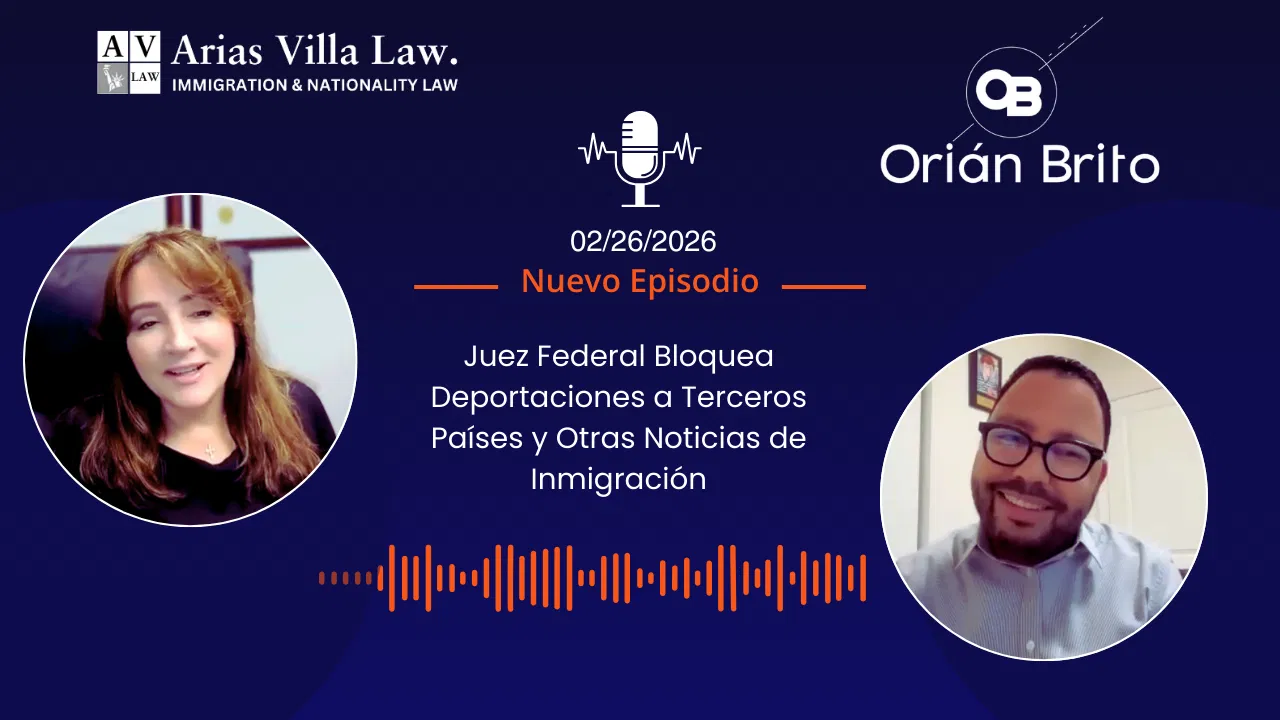
Yesterday, I spoke with journalist Orian Brito about a very important federal court decision issued in Massachusetts on February 25. The judge halted a key deportation practice: sending immigrants to a third country without first attempting removal to the country listed on the final order of removal, and without giving the person meaningful notice and a real opportunity to object.
This matters because it is not only a legal issue — it is a due process issue.
FOLLOW ME ON SOCIAL MEDIA
The decision explains that when someone has a final order of deportation, that order typically specifies where the government must remove the person, and sometimes also lists an alternative country. The problem addressed by the judge is that, under the policy being challenged, people could be sent to completely different countries — places where they have no ties, no support network, and in many cases, serious fear of harm.
The court found that this policy was being applied without meaningful notice and without a real chance to challenge the removal to a third country. In other words, a person could be placed on a path toward being sent somewhere unexpected, without time to prepare or defend themselves.
The judge’s order includes a 15-day pause, which means that for a limited period, the government could still attempt to continue implementing this policy while the case progresses. After that, we must watch what happens next, including whether there is an appeal and whether additional court orders follow.
For those who are detained — especially those who do not have a lawyer — I shared a very practical recommendation: put your fear in writing immediately. Even a handwritten letter is better than silence. If you fear being sent to a third country, communicate that fear clearly and document your objection.
In the interview, I referenced the case name as: DVD v. Department of Homeland Security (D–V–D).
Orian also raised a question many people are asking right now: “Can I travel within the United States if I have a pending case, like asylum?” My recommendation remains cautious: if the trip is not urgent, avoid travel for now. Enforcement activity has been increasing and can be unpredictable. If travel is unavoidable, it is important to carry proof of your pending case and any valid documentation you have.
We also discussed something that too many people underestimate: social media matters. Immigration processes — including consular matters — can involve review of online presence. Even if someone deletes a post, it may still be retrievable. I strongly recommend staying respectful, avoiding threats or violent language, and treating every post as permanent.
If you have questions about your situation, please do not rely on rumors or “what happened to a friend.” Every case is different, and a small detail can change the outcome.
Office: (305) 671-0018
WhatsApp: (305) 233-3110
Legal disclaimer: This post is general information and does not create an attorney-client relationship. For legal advice, you must schedule a consultation and receive guidance based on your specific facts.
Spanish Transcript
ORIAN BRITO:
Hola, hoy es un buen día, amigos. Gracias por estar allí, por conectarse con este espacio. Así que los invito a todos a que se conecten porque hay buenas noticias. Un juez federal en Massachusetts acaba de frenar una práctica clave en materia de deportaciones. La corte dictaminó que el gobierno de Trump no puede enviar inmigrantes a un tercer país sin antes intentar deportarlos al país que figura en su orden final de expulsión y sin otorgarles la oportunidad de defenderse.
La decisión de este juez establece que las autoridades deben dar una notificación sustancial antes de cualquier expulsión a un tercer país. Recordemos que hay varios… Ecuador, incluso países de África, que están en la lista, garantizando así el debido proceso y la posibilidad de impugnar la deportación.
¿Qué significa eso en la práctica? ¿A quién protege esta decisión? Puede cambiar la forma en la que se está ejecutando las deportaciones actualmente. Hoy me acompaña la abogada de inmigración Martha Arias, que me alegra muchísimo tenerla. Tenía días buscándola, pero bueno, ha estado muy full; se logró y aquí estamos. Abogada, un placer.
ABOGADA MARTHA ARIAS:
Gracias, Orian. Un saludo para usted y toda su audiencia. Y sí, bueno, un poco ocupadita. Como dicen en Colombia, palabra que me parece chistosa, “un poco escasa, pero aquí estoy”.
ORIAN BRITO:
Bueno, pero está…
ABOGADA MARTHA ARIAS:
Esa es una palabra cómica para aplicarla a las personas.
ORIAN BRITO:
Y aplica cuando las personas están bastante ocupadas, cuando ya… Y por supuesto, estos cambios en materia migratoria tienen a muchos profesionales como usted corriendo de aquí para allá con sus clientes. Pero me alegra que hoy nos reencontremos con una buena noticia. ¿Cómo evalúa la decisión de este juez y cómo podría impactar a esos migrantes que tienen orden de deportación, por ejemplo?
ABOGADA MARTHA ARIAS:
A ver, ¿cómo puede impactar a los que tienen orden de deportación, dice usted?
ORIAN BRITO:
Sí, y sobre todo, bueno, recordemos que también esta estrategia de que migrantes vayan a un tercer país también, y usted puede corregirme, afectaba a las personas que están solicitando asilo, que los llevaban a un tercer país a esperar.
ABOGADA MARTHA ARIAS:
Exacto. Bueno, ¿cómo los afecta? En este momento lo que hizo este juez de Massachusetts del día de ayer, febrero 25, como usted lo dijo, fue número uno, anular esa política administrativa actual de DHS, Department of Homeland Security, de ICE, de deportar personas a terceros países. La anula. Sin embargo, da una pausa de 15 días. Es decir, dentro de los próximos 15 días, a partir de esta decisión, el gobierno puede implementar o continuar implementando esta política. Después de 15 días, vamos a ver si se apela y si se daría una medida cautelar mientras está la apelación.
Entonces, en 15 días podemos ver todavía estas deportaciones. Después de 15 días vamos a esperar a ver. La buena noticia, como dice usted, es que la política es anulada. A ver, ¿cuáles son las razones por las que el juez anula esta política? Hay dos cosas importantes. Una, la considera ilegal y dos, inconstitucional. Ilegal porque viola derecho a ley federal. E inconstitucional, obviamente, porque viola la Constitución y específicamente el debido proceso.
La orden dice el juez que a estas personas no se les da una notificación significativa de que van a ser deportados a un tercer país, eso es lo primero. Lo segundo es que tampoco se les da una oportunidad real de desafiar u objetar esa remoción a un tercer país; y ahí es donde no sé si quiere que le explique… La situación que está pasando con estas deportaciones a terceros países, como usted lo dijo, es si una persona tiene una deportación porque ha tenido una deportación de tiempo atrás y lo coge a ICE, pues lo puede deportar no a su país, sino a ese tercer país. Como usted bien lo dijo, muchas personas que están aplicando para asilo, tenían un asilo pendiente, también pues obtenían esta deportación o lo podían deportar a terceros países.
¿Qué pasa, Orian? Cuando una persona tiene una orden final de deportación, la orden final de deportación dice el juez a dónde se va a deportar la persona y si hay un país alternativo. Le doy un ejemplo: una persona va y pide asilo. La persona es, por decir algo, de Venezuela. El juez dice: se ordena la deportación a Venezuela y en el alternativo a Italia, si la persona también es ciudadana de Italia. Y si fuera así, si no se ordena a Venezuela, ¿qué pasa? Pues viene y coge esta persona y la manda para Sudán, para Uganda, por allá, al fin del mundo. Eso es una.
No tiene contacto, no tiene lazos, ni nunca ha estado en Uganda o en Sudáfrica o en no sé dónde y la está mandando para allá. Pero el juez cuando ordenó la deportación dijo que la persona era deportada a Venezuela. Entonces ahí ya tenemos un problema, porque es que el juez no dijo que la deportaran a Sudáfrica, Uganda o al fin del mundo. Dijo: deporten a Venezuela o en el alternativo a X país.
Entonces ahí tenemos un problema porque se está violando la ley, la ley dice que la persona debe ser deportada a ese país.
Segundo, la persona tiene derecho a objetar o a que se le dé notificación. Entonces, si a la persona la cogen y la mandan para Uganda sin que le diga: “Mire, señor fulano, a usted no lo van a mandar para Venezuela, lo van a mandar al fin del mundo”, esa persona tiene derecho a decir: “No, es que a mí me van a matar en el fin del mundo también o tengo miedo de ir al fin del mundo, ¿sabe qué?, mándeme para Venezuela”.
Esa es… sencillamente no es ni siquiera que el gobierno está diciendo… este gobierno está diciendo: “usted no lo puede deportar”. En términos generales lo que está diciendo es: se le debe dar notificación con anterioridad significativa y se le debe dar la oportunidad a que objete.
Eso es lo que da esta decisión. Las agencias sin ánimo de lucro que están demandando estos casos son agencias que están haciendo, vamos a decir, todo el trabajo, poniendo el músculo, como dicen en inglés, para ayudar a los inmigrantes en esta situación tan difícil como son las deportaciones a terceros países.
ORIAN BRITO:
¿Por qué se utilizaba esto como política? Y me llama la atención su apreciación porque fíjese, por ejemplo, en el caso de países como Venezuela existe ya una conexión y una deportación que no sólo se ha intensificado desde la salida o la captura de Nicolás Maduro, sino previamente veíamos el envío de migrantes. De hecho hay un plan que se llama, en Venezuela lo llaman “Vuelta a la Patria”, algo así, que los reciben con bombos y platillos, con videos, con regalos, etcétera. ¿Por qué, por ejemplo, un migrante… se toma esta decisión de que vaya a un tercer país? ¿Es inclusivamente porque su país no lo acepta o es una política que busca más como marcar un precedente de los riesgos que puedes acarrear si estás aquí en el país y enfrentas una orden de deportación o tienes un asilo pendiente?
ABOGADA MARTHA ARIAS:
Pueden ser varias de esas razones que usted menciona. Por ejemplo, le voy a leer exactamente, la decisión del juez dice: esto aplica para personas que estén en deportaciones bajo la sección 240, que es un proceso de deportación regular; bajo la deportación 241, que son los que están en expedited removal, que están poniendo ahora en expedited removal; y 238, personas que están, por ejemplo, en withholding of removal o withholding-only cases. ¿Qué quiere decir eso? Mire, hay personas que… le doy un ejemplo práctico para que la gente entienda, porque es bastante técnico, pero les puedo explicar muy sencillito.
Si una persona entró a los Estados Unidos hace 30 años y hace cinco años, con esta maravilla de notario, de paralegal o de defraudador, que le dijo: “No, venga, usted sí califica para un asilo”, y le presenta una petición de asilo…
Si esa persona entra en una petición de asilo después de estar ya hace 25, 30 años acá, esa petición, lo único que puede entrar es como se la van a negar y lo van a mandar a la corte, y la persona puede pedir un withholding of removal. O puede ser también personas que ya tienen una deportación y surgió la posibilidad de pedir un withholding, que es un beneficio para quedarse en el país porque su vida corre peligro en el país de origen.
Entonces, esta decisión aplica a cualquier persona que esté en esas circunstancias. Entonces, si es por ejemplo el caso de un withholding que a la persona se lo aprobaron y está… si a la persona le aprobaron un withholding quiere decir que la persona tiene una deportación, pero no la van a ejecutar, y se va a quedar aquí. La persona puede pedir permiso de trabajo, puede quedarse en los Estados Unidos. Pero el gobierno puede deportarlo a un tercer país. No lo puede deportar al país del que le dieron el withholding.
No puede regresar a Perú o a Colombia, Venezuela, qué sé yo. Pero entonces le dieron un withholding y el gobierno dice: “Ah, a mí… tú no puedes mandarme allá, pero yo te voy a mandar a Honduras o te voy a mandar a Zoda y te voy a mandar a…”
ORIAN BRITO:
Ecuador, Ecuador, que es otro país que también ha actuado, ha estado en este acuerdo de recibir inmigrantes. Guatemala también.
ABOGADA MARTHA ARIAS:
Entonces, lo pueden enviar a esos terceros países, pues, aunque la persona… o aunque tenga este beneficio de lo que… Entonces es… es… es una situación un poco complicada.
ORIAN BRITO:
Bueno, pero también habla un poco de la independencia judicial que hay en el país y cuando el juez falla. Son una de las cosas ricas de esta nación. Cuando vemos decisiones que los tribunales levantan su voz y dicen: “Esto no puede ocurrir”, brindan cierta confianza al país y a la gente que está enfrentando estos procesos. ¿Qué recomendación se les puede dar? Como estamos hablando de un periodo de 15 días que todavía podemos ver estos casos, usted me lo dice, estamos a la espera, por supuesto, de la palabra clave que es apelación, donde el gobierno ya dice: “Ah, ya va, yo estoy en contra de esta decisión del juez”. ¿Cuál sería la actitud más inteligente que cualquier migrante que pueda estar pasando por este proceso debe tomar tras conocer esta decisión?
ABOGADA MARTHA ARIAS:
Yo pienso que lo primero que va a hacer esa persona, sobre todo los que estén en detención, es, aunque no tengan abogado, hacer una carta, aunque sea a mano, con su puño y letra, pasársela a su deportador o al centro donde está de detención, y que diga: “Yo tengo miedo de ser enviado a un tercer país. A mí no me envíen a un tercer país. No quiero que me envíen a un tercer país”, aunque de acuerdo a este fallo lo pueden hacer dentro de los 15 días siguientes. O conseguir un abogado que lo haga.
Pero si no tiene la plata, si ya está cansado de pagar abogado o no tiene el dinero, pues haga una carta, infórmese, mándesela al deportador, trate de comunicarse con ese deportador si está todavía detenido y diga: “Yo tengo miedo de ir a ese tercer país. Yo no quiero que me deporten a un tercer país. Yo soy ciudadano de tal parte y me opongo a que me deporten a tal país y me quiero proteger con la decisión del caso del juez de Massachusetts”. Ese caso es DVD versus Department of Homeland Security. D de dedo, V de Víctor, D de dedo. DVD.
ORIAN BRITO:
Perfecto, perfecto. Muchísimas gracias por aclarar esto. Y quiero aprovechar que la tengo porque tengo preguntas que me hacen muchas personas sobre procesos que ya tienen en curso. Ejemplo, ayer una persona me decía… oye, bueno, para ser sinceros, dos me indicaban: “Oye, tengo un proceso de asilo pendiente y frente a todos los cambios que se está dando, tengo miedo de viajar, tengo miedo de montarme en un avión, aunque tengo un proceso pendiente en USCIS”.
Por otra parte, conozco gente que sí se atreve, se monta y viaja y no ha pasado nada. Enhorabuena. Me refiero a personas que tienen algún tipo de caso pendiente y me decían: “No sé qué hacer. No sé si dejarme llevar por la suerte”. Y aunque es una decisión muy particular, no sé qué hacer cuando un cliente le presenta a usted esa duda. ¿Qué le dice?
ABOGADA MARTHA ARIAS:
Que no viajen. Yo les estoy recomendando a mis clientes que la verdad, si se pueden abstener de un viaje porque no sea apremiante, no sea urgente, no viajen. En este momento estamos en una situación difícil donde hay redadas en cualquier ciudad, en cualquier parte, en cualquier momento, y no sabemos cuándo le va a tocar a la persona.
Por ejemplo, recientemente, le digo, Orian, hay muchas redadas en los Cayos de aquí de la Florida. Muchas, muchas. Y en la oficina ya he tenido más de tres casos en una semana, digo, tres casos en una semana, de personas arrestadas en el sur de la Florida, en los Cayos. Los Cayos está siendo un sitio muy fácil para hacer redadas, y está pasando. Entonces las personas tienen que tener cuidado. Así como puede ser aquí en Miami en las calles, puede ser en otro… en nuestro estado. Los estados como Chicago, los estados como California, son estados donde hay muchas redadas.
En New York han parado un poquito, pero hubo muchas redadas. Entonces, mi consejo para las personas es: si su viaje no es urgente, si no es obligatorio por su trabajo, no viaje. Ahora, si es por trabajo, si es urgente, tiene que viajar: trate de viajar con sus jefes, con un grupo, trate de tener toda su documentación al día, que sería la prueba de que su asilo está pendiente, su permiso de trabajo, su licencia de conducir, su pasaporte vigente. Trate de tener toda la documentación que pruebe que la persona tiene algún tipo de estatus o está pendiente de algo, porque no creo que la situación esté tan… agradable como para que la gente esté viajando en este momento.
ORIAN BRITO:
No, yo no lo comprendo porque, por ejemplo, muchas personas aquí trabajan, todos trabajamos, quiero decir, hay momentos donde dice: “Bueno, necesito este fin de semana quizás me voy a Nueva York a disfrutar algo distinto, a disfrutar del Times Square, no sé, comerme algo, visitar un familiar que tengo en Carolina del Norte”, y vi los pasajes baratos y quiero ir a visitarlo. Entonces es una situación complicada.
Por ejemplo, yo vivo en Miami, pero hay momentos que mi Miami me ahoga. O sea, siento que voy a Kendall, subo a Fort Lauderdale y es lo mismo. Entonces siempre busco uno, uno, uno… un escape. Pero si la recomendación es esa, es importante.
Si tiene que hacer el viaje, bueno, lo ha dicho la abogada Martha Arias: lleve todos sus documentos, lleve su pasaporte, lleve su asilo pendiente y encomiende… Yo creo que me sorprende porque cuando he estado en aeropuertos recientemente todavía no he visto en el aeropuerto que se lleven a alguien. Eso no lo he visto yo. Pero claro, yo no estoy todo el día en el aeropuerto ni en los aeropuertos del país. Entonces para evitar un susto, es lo más sensato, ¿no?
ABOGADA MARTHA ARIAS:
Bueno, yo le voy a decir una cosa: yo tampoco personalmente he visto a nadie siendo arrestado en un aeropuerto. Tampoco creo que lo vayan a hacer tan a la vista. Si lo hacen, de pronto lo hacen de forma más diplomática. Sin embargo, sin embargo, sí le puedo decir que hay colegas, abogados de inmigración, que me han dicho que se han bajado vuelos nacionales y al bajarse hay oficiales de ICE al bajarse del avión. Los identifican. No están con chaleco ni nada, pero son abogados que llevan años haciendo esto, identifican a ciertos oficiales, y se les han acercado y les han dicho: “¿Usted qué hace aquí? ¿Usted está trabajando?” No sé qué, y los oficiales están trabajando.
Entonces, puede que sí haya oficiales de ICE al bajar de los aviones locales. Puede que nosotros ni nadie hayamos visto nada porque no están con chalecos, no están marcados.
ORIAN BRITO:
Sí, sí, sí, era lo que yo le decía. Es que yo le decía a una amiga —y lo digo con parte de esa conversación— yo le decía ayer: “Bueno, es que conozco gente que había viajado…” y en más gente que no tiene estatus y que puede salir sin problemas, gente con asilo pendiente y ha viajado. No puedo reportar que en la práctica yo haya recibido más… Si alguien ve este video y me dice: “Sí, estuve en este aeropuerto y la situación es complicada”, le agradezco eso. Nutre, brinda información de cómo se está viviendo porque no tenemos los ojos en los 50 estados.
ABOGADA MARTHA ARIAS:
Eso es lo que ve la gente: empezar a dar esa información.
ORIAN BRITO:
Claro, para conocer dónde está el sorteo, o sea, es decir, en qué aeropuerto donde se ve mayor presencia de estos oficiales y así la gente que esté en una situación vulnerable evite algún tipo de situación compleja. Es lo que podemos decir por ahora.
Abogada, me gustaría que dé un número de contacto, por supuesto, porque en estos momentos donde es importante tener algo que te ate al país —y ojo, cuando digo algo que te ate, quiero decir hay muchas alternativas; no tiene que ser exclusivamente el asilo— de repente hay una empresa que te quiere pedir, de repente tienes una… no sé, hay muchos trámites. Yo no soy abogado, pero tiene que sentarse con uno para que le explique cuál es el mejor camino, y usted yo sé que puede orientar.
ABOGADA MARTHA ARIAS:
Efectivamente, pues varias cosas. Uno, mi página web es www.ariasvilla.com
. Arias, mi apellido; Villa, todo junto; AriasVilla… el nombre del bufete de abogados: AriasVilla.com. El teléfono es (305) 671-0018. Ese es el teléfono de la oficina. Y hay otro número que es (305) 233-3110; es el celular de la oficina donde pueden llamar, incluso que si están en otra parte pueden contactarnos por WhatsApp: (305) 233-3110. Y AriasVilla.com. En Instagram estamos como @Martha_Arias98.
ORIAN BRITO:
Además, la abogada Martha Arias preside… Yo sé que sus opiniones en este espacio —y lo aclaro— tiene que ver con su experiencia como abogada, pero ya preside en la asociación de abogados de inmigración, ¿no?
ABOGADA MARTHA ARIAS:
Correcto. Mi término es 25-26. También, oye, mi término pronto… en mayo.
ORIAN BRITO:
¿Estás satisfecha con el trabajo que se ha hecho?
ABOGADA MARTHA ARIAS:
Sí, mucho. Estoy muy satisfecha con mi trabajo. La mayoría de la membresía me ha expresado su gratitud.
ORIAN BRITO:
Sí, yo he escuchado, yo he preguntado a colega suyo y me dice: “Sí, no, ya está allí trabajando activamente”, y le tiene mucho aprecio, me lo han dicho.
ABOGADA MARTHA ARIAS:
Exactamente. Así que bueno, habrá alguno que otro que de pronto no le gustamos, como toda la vida. Pero el grupo, la mayoría, sí, están todos muy contentos. Y bueno, yo también estoy muy satisfecha con mi labor.
ORIAN BRITO:
Igual aquí me pasa lo mismo en este canal: hay mucha gente muy amable que me mandó un correo, lo agradece, me deja bendiciones, lo valoro. Me escriben por Instagram también cuando por aquí no respondo y buenísimo. Y hay otros u otras personas que, bueno, se me quieren poner casi que en el paredón, pero bueno, es parte de la vida, es parte de la vida. No pasa nada.
Yo acepto lo que sí acepto: son las críticas constructivas. A gusto, pongo una banderita aquí para que se vea algo. Pues bueno, esto lo quiero condicionar para que por supuesto se crezca mucho más. Pero hay gente que me pide: “Pon una banderita para que no sea tan blanco”, o “Deja hablar más”. Esas críticas… yo las acepto. Ya cuando me quieren para el paredón, ya la cosa cambia.
ABOGADA MARTHA ARIAS:
Exacto. Sí. O sea, todo lo que es positivo vale. Y lo que yo considero siempre también lo tomo así: es en las redes sociales, todos, todos, no importa quién, todos tenemos que tener cuidado con lo que publicamos, porque en las redes sociales nada desaparece. Aunque las personas borren lo que escribieron, en el futuro eso le puede causar un problema.
Y aprovecho esa oportunidad también para decirlo porque, por ejemplo, usted sabe muy bien que la inmigración y sobre todo el Departamento de Estado está pidiendo la información de las redes sociales de las personas, y la persona cree que no va a pasar nada o que si borra no va a existir. Claro, lo que queda en las redes va a quedar y las redes sociales es un gran mecanismo de investigación de las autoridades. Sean más cuidadosos, sobre todo personas que ponen comentarios violentos o amenazantes, porque aunque se estén desahogando… en el futuro esa información no sabe si le va a salir, le va a ser perjudicial.
ORIAN BRITO:
Y al final hay que tener responsabilidad con todo lo que hacemos. Hay que tener responsabilidad al momento de actuar. Podemos expresar abiertamente nuestro desacuerdo con algunas cosas. No pasa absolutamente nada. Yo lo hago: cuando algo no me gusta digo: “No estoy de acuerdo con esto”, “Esto sí lo apoyo”, pero siempre tiene que hacerse con responsabilidad y respeto. Las dos ERRES son fundamentales.
No, al momento: “No estoy de acuerdo con esta precisión”, perfecto, “No estoy de acuerdo”, pero ya aprovechar… y además que la gente es muy valiente cuando está a través de una red, pero frente a frente no creo que exista la misma… el mismo guáramo, como dicen en Venezuela, el embalentonamiento para tratar, ser embalentonado y atacar al otro. Pero bueno, es lo que hay. Hay que tener responsabilidad.
Y parte de esa responsabilidad implica, amigos, que si usted tiene alguna duda, consulte con un profesional. No tenga miedo, tenga la confianza, actúe con certeza. Los pasos firmes son en este momento fundamentales para evitar cualquier tipo de complicación.
Deje sus preguntas, comentarios. Igualmente está el contacto de la abogada Martha Arias, abogada de inmigración, para que usted, si tiene alguna duda, pues se comunique con ella. Y ahí está en su oficina, como la pueden ver, esperándolo para que usted lo atienda. Muchas gracias.
ABOGADA MARTHA ARIAS:
Gracias a usted, Orian.
ORIAN BRITO:
Y no se me pierda, que yo sé que estamos y que vamos a tratar de conectarnos un poquito más. A ustedes un fuerte abrazo y gracias. Será hasta la próxima. Cuídense mucho.
English Translation
ORIAN BRITO:
Hello, today is a good day, friends. Thank you for being there, for connecting with this space. So I invite everyone to connect because there is good news. A federal judge in Massachusetts has just stopped a key practice in deportations. The court ruled that the Trump administration cannot send immigrants to a third country without first trying to deport them to the country listed in their final order of removal and without giving them the opportunity to defend themselves.
The decision by this judge establishes that the authorities must give substantial notice before any removal to a third country. Let’s remember that there are several… Ecuador, even countries in Africa, that are on the list, thus guaranteeing due process and the possibility of challenging the deportation.
What does that mean in practice? Who does this decision protect? It can change the way deportations are currently being carried out. Today I am joined by immigration attorney Martha Arias, and I am very happy to have her. I had been looking for her for days, but well, she has been very busy; we managed it and here we are. Attorney, a pleasure.
ATTORNEY MARTHA ARIAS:
Thank you, Orian. Greetings to you and your entire audience. And yes, well, a bit busy. As they say in Colombia, a word that I find funny, “un poco escasa, pero aquí estoy” (“I’ve been a little busy, but here I am.”)
ORIAN BRITO:
Well, but you are…
ATTORNEY MARTHA ARIAS:
That is a comical word to apply to people.
ORIAN BRITO:
And it applies when people are quite busy, when already… And of course, these changes in immigration matters have many professionals like you running from here to there with your clients. But I’m glad that today we reconnect with good news. How do you evaluate this judge’s decision and how could it impact those migrants who have a deportation order, for example?
ATTORNEY MARTHA ARIAS:
Let’s see, how can it impact those who have a deportation order, you say?
ORIAN BRITO:
Yes, and above all, well, let’s remember that this strategy of sending migrants to a third country as well, and you can correct me, also affected people who are requesting asylum, that they would take them to a third country to wait.
ATTORNEY MARTHA ARIAS:
Exactly. Well, how does it affect them? At this moment, what this Massachusetts judge did yesterday, February 25, as you said, was, number one, to overturn that current administrative policy of DHS, Department of Homeland Security, of ICE, of deporting people to third countries. He overturns it. However, he gives a pause of 15 days. That is, within the next 15 days, starting from this decision, the government can implement or continue implementing this policy. After 15 days, we will see if it is appealed and whether an injunction would be granted while the appeal is pending.
So, in 15 days we can still see these deportations. After 15 days we will wait and see. The good news, as you say, is that the policy is overturned. Now, what are the reasons the judge overturns this policy? There are two important things. One, he considers it illegal, and two, unconstitutional. Illegal because it violates federal law. And unconstitutional, obviously, because it violates the Constitution and specifically due process.
The order says, the judge says, that these people are not given meaningful notice that they are going to be deported to a third country; that is the first thing. The second is that they are also not given a real opportunity to challenge or object to that removal to a third country; and that is where I don’t know if you want me to explain… The situation that is happening with these deportations to third countries, as you said, is that if a person has a deportation because they have had a deportation from a long time ago and ICE catches them, well, they can deport them not to their country, but to that third country. As you said, many people who are applying for asylum, who had a pending asylum, also then received this deportation or could be deported to third countries.
What happens, Orian? When a person has a final order of deportation, the final order of deportation says, the judge says, where the person is to be deported to and if there is an alternative country. I’ll give you an example: a person goes and asks for asylum. The person is, for example, from Venezuela. The judge says: deportation is ordered to Venezuela and, alternatively, to Italy, if the person is also a citizen of Italy. And if it were like that, if it is not ordered to Venezuela, what happens? Well, they come and take this person and send them to Sudan, to Uganda, out there, to the end of the world. That is one.
They have no contact, they have no ties, they have never been in Uganda or in South Africa or in I don’t know where, and they are sending them there. But the judge, when he ordered the deportation, said the person was deported to Venezuela. So there we already have a problem, because the judge did not say to deport them to South Africa, Uganda, or the end of the world. He said: deport to Venezuela, or alternatively to X country.
So there we have a problem because the law is being violated; the law says the person must be deported to that country.
Second, the person has the right to object or to be given notice. So, if they take the person and send them to Uganda without telling them: “Look, Mr. so-and-so, they are not going to send you to Venezuela; they are going to send you to the end of the world,” that person has the right to say: “No, it’s that they will kill me at the end of the world too,” or “I am afraid to go to the end of the world; you know what, send me to Venezuela.”
That is… essentially it is not even that the government is saying… this government is saying: “You cannot deport them.” In general terms, what it is saying is: they must be given notice with meaningful advance time and they must be given the opportunity to object.
That is what this decision gives. The nonprofit agencies that are suing these cases are agencies that are doing, let’s say, all the work, putting in the muscle, as they say in English, to help immigrants in this very difficult situation, which is deportations to third countries.
ORIAN BRITO:
Why was this used as a policy? And your view catches my attention because look, for example, in the case of countries like Venezuela there is already a connection and a deportation that has not only intensified since the exit or the capture of Nicolás Maduro, but previously we were seeing the sending of migrants. In fact, there is a plan that is called, in Venezuela they call it “Return to the Homeland,” something like that, where they receive them with fanfare, with videos, with gifts, etcetera. Why, for example, would a migrant… would this decision be made that they go to a third country? Is it even because their country does not accept them, or is it a policy that seeks more to mark a precedent of the risks you can face if you are here in the country and you face a deportation order or you have a pending asylum?
ATTORNEY MARTHA ARIAS:
It can be several of those reasons you mention. For example, I am going to read you exactly: the judge’s decision says this applies to people who are in deportations under section 240, which is a regular deportation process; under deportation 241, which are the ones that are in expedited removal, that they are now placing in expedited removal; and 238, people who are, for example, in withholding of removal or withholding-only cases. What does that mean? Look, there are people who… I will give a practical example so people understand, because it is quite technical, but I can explain it very simply.
If a person entered the United States 30 years ago and five years ago, with this wonderful notary, paralegal, or fraudster, who told them: “No, come, you do qualify for asylum,” and files an asylum application for them…
If that person files an asylum application after already being here 25, 30 years, that application, the only thing that can happen is that they are going to deny it and send them to court, and the person can request withholding of removal. Or it can also be people who already have a deportation and the possibility arose to request withholding, which is a benefit to remain in the country because their life is in danger in the country of origin.
So, this decision applies to anyone who is in those circumstances. So, if it is for example the case of a withholding that was approved for the person and is… if the person was approved for withholding, it means the person has a deportation, but they are not going to execute it, and they are going to stay here. The person can request a work permit, can stay in the United States. But the government can deport them to a third country. It cannot deport them to the country from which they were granted withholding.
They cannot go back to Peru or to Colombia, Venezuela, who knows. But then they were given withholding and the government says: “Ah, to me… you cannot send me there, but I will send you to Honduras or I will send you to Zoda and I will send you to…”
ORIAN BRITO:
Ecuador, Ecuador, which is another country that has also acted, has been in this agreement to receive immigrants. Guatemala as well.
ATTORNEY MARTHA ARIAS:
So, they can send them to those third countries, well, even though the person… or even though they have this benefit of what… So it is, it is, it is a situation a bit complicated.
ORIAN BRITO:
Well, but it also speaks a bit about the judicial independence that exists in the country and when the judge rules. They are one of the rich things of this nation. When we see decisions where the courts raise their voice and say, “This cannot happen,” they provide a certain confidence to the country and to the people who are facing these processes. What recommendation can be given to them? Since we are talking about a period of 15 days in which we can still see these cases, you tell me, we are waiting, of course, for the key word which is appeal, where the government already says, “Ah, hold on, I am against this judge’s decision.” What would be the smartest attitude that any migrant who may be going through this process should take after learning of this decision?
ATTORNEY MARTHA ARIAS:
I think the first thing that person is going to do, especially those who are in detention, is, even if they do not have a lawyer, to make a letter, even handwritten, with their own hand, give it to their deportation officer or to the detention center where they are, and that it says: “I am afraid of being sent to a third country. Do not send me to a third country. I do not want to be sent to a third country,” even though according to this ruling they can do it within the next 15 days. Or get a lawyer to do it.
But if they do not have the money, if they are already tired of paying a lawyer or do not have the money, then make a letter, inform yourself, send it to the deportation officer, try to communicate with that deportation officer if you are still detained and say: “I am afraid to go to that third country. I do not want to be deported to a third country. I am a citizen of such-and-such place and I object to being deported to such-and-such country and I want to protect myself with the decision in the Massachusetts judge case.” That case is DVD versus Department of Homeland Security. D as in finger, V as in Victor, D as in finger. DVD.
ORIAN BRITO:
Perfect, perfect. Thank you very much for clarifying this. And I want to take advantage since I have you because I have questions that many people ask me about processes they already have underway. Example, yesterday a person was telling me… hey, well, to be honest, two were telling me: “Hey, I have a pending asylum process and faced with all the changes that are happening, I am afraid to travel, I am afraid to get on a plane, even though I have a pending process in USCIS.”
On the other hand, I know people who do dare, they get on and travel and nothing has happened. Great. I am referring to people who have some kind of pending case and they told me: “I don’t know what to do. I don’t know whether to let myself be guided by luck.” And although it is a very particular decision, I don’t know what to do when a client presents you with that doubt. What do you tell them?
ATTORNEY MARTHA ARIAS:
That they should not travel. I am recommending to my clients that honestly, if they can refrain from a trip because it is not pressing, it is not urgent, they should not travel. Right now we are in a difficult situation where there are raids in any city, anywhere, at any moment, and we do not know when it will be that person’s turn.
For example, recently, I tell you, Orian, there are many raids in the Keys here in Florida. Many, many. And in the office I have already had more than three cases in one week, I mean three cases in one week, of people arrested in South Florida in the Keys. The Keys is becoming a very easy place to do raids, and it is happening. So people have to be careful. Just as it can be here in Miami on the streets, it can be in another… in our state. States like Chicago, states like California, are states where there are many raids.
In New York they have slowed down a little, but there were many raids. So my advice to people is: if your trip is not urgent, if it is not mandatory for your work, do not travel. Now, if it is for work, if it is urgent, you have to travel: try to travel with your bosses, with a group, try to have all your documentation up to date, which would be proof that your asylum is pending, your work permit, your driver’s license, your valid passport. Try to have all the documentation that proves the person has some kind of status or has something pending, because I do not think the situation is that… pleasant for people to be traveling at this moment.
ORIAN BRITO:
No, I understand it because, for example, many people here work, we all work, I mean, there are moments where you say, “Well I need this weekend, maybe I go to New York to enjoy something different, to enjoy Times Square, I don’t know, eat something, visit a relative I have in North Carolina,” and I saw cheap tickets and I want to go visit. So it’s a complicated situation.
For example, I live in Miami, but there are moments when my Miami suffocates me. I mean, I feel like I go to Kendall, I go up to Fort Lauderdale and it’s the same. So I always look for an escape. But if the recommendation is that, it is important.
If you have to make the trip, well, attorney Martha Arias has said it: bring all your documents, bring your passport, bring your pending asylum and entrust yourself… I think it surprises me because when I have been in airports recently, I still haven’t seen at the airport that they take someone away. I haven’t seen that. But of course, I am not at the airport all day nor in all the airports in the country. So to avoid a scare, it is the most sensible thing, right?
ATTORNEY MARTHA ARIAS:
Well, I will tell you one thing: I also personally have not seen anyone being arrested at an airport. I also don’t think they are going to do it so visibly. If they do it, perhaps they do it in a more diplomatic way. However, however, I can tell you that there are colleagues, immigration attorneys, who have told me that they have gotten off domestic flights and when getting off there are ICE officers when they get off the plane. They identify them. They are not wearing vests or anything, but they are attorneys who have been doing this for years, they identify certain officers, and they have approached them and told them, “What are you doing here? Are you working?” I don’t know what, and the officers are working.
So, it may be that there are ICE officers when getting off local flights. It may be that neither we nor anyone has seen anything because they are not wearing vests, they are not marked.
ORIAN BRITO:
Yes, yes, yes, that’s what I was telling you. It’s that I was telling a friend —and I say it as part of that conversation— I was telling her yesterday: “Well, it’s that I know people who had traveled…” and more people who don’t have status and who can go out without problems, people with pending asylum and they have traveled. I cannot report that in practice I have received more… If someone watches this video and tells me, “Yes, I was at this airport and the situation is complicated,” I appreciate that. It feeds, it provides information on how it is being lived because we do not have eyes in all 50 states.
ATTORNEY MARTHA ARIAS:
That is what people see: starting to give that information.
ORIAN BRITO:
Of course, to know where the draw is, meaning, in which airport where there is greater presence of these officers, and thus people who are in a vulnerable situation avoid some kind of complex situation. That is what we can say for now.
Attorney, I would like you to give a contact number, of course, because in these moments where it is important to have something that ties you to the country —and attention, when I say something that ties you, I mean there are many alternatives; it does not have to be exclusively asylum— maybe there is a company that wants to petition you, maybe you have a… I don’t know, there are many procedures. I am not a lawyer, but you have to sit down with one so they can explain what the best path is, and I know you can guide.
ATTORNEY MARTHA ARIAS:
Exactly, well, several things. One, my website is www.ariasvilla.com
. Arias, my last name, Villa all together; AriasVilla… the name of the law firm: AriasVilla.com. The phone is (305) 671-0018. That is the office phone. And there is another number which is (305) 233-3110; it is the office cell where you can call, and even if you are elsewhere you can contact us by WhatsApp: (305) 233-3110. And AriasVilla.com. On Instagram we are @Martha_Arias98.
ORIAN BRITO:
Also, attorney Martha Arias presides… I know that your opinions in this space —and I clarify it— have to do with your experience as an attorney, but you already preside in the immigration attorneys association, right?
ATTORNEY MARTHA ARIAS:
Correct. My term is 25-26. Also, hey, my term soon… in May.
ORIAN BRITO:
Are you satisfied with the work that has been done?
ATTORNEY MARTHA ARIAS:
Yes, very much. I am very satisfied with my work. The majority of the membership has expressed their gratitude to me.
ORIAN BRITO:
Yes, I have heard it, I have asked a colleague of yours and he tells me, “Yes, no, she is already there working actively,” and they have a lot of appreciation for you, they have told me.
ATTORNEY MARTHA ARIAS:
Exactly. So well, there will be one or another who maybe doesn’t like us, like in all of life. But the group, the majority, yes, they are all very happy. And well, I am also very satisfied with my work.
ORIAN BRITO:
The same happens to me here on this channel: there are many very kind people who sent me an email, they thank me, they leave me blessings, I value it. They write to me on Instagram too when I don’t respond here, and great. And there are other people who, well, they want to almost put me before a firing squad, but well, it’s part of life, it’s part of life. Nothing happens.
I accept what I do accept: constructive criticism. With pleasure, I put a little flag here so that something can be seen. Well, I want to condition that so that of course it grows much more. But there are people who ask me, “Put a little flag so it won’t be so white,” or “Let people talk more,” or those criticisms… I accept them. When they want to put me before a firing squad, that’s when things change.
ATTORNEY MARTHA ARIAS:
Exactly. Yes. I mean, everything that is positive is worth it, and what I always consider, I also take it that way: on social media, everyone, everyone, no matter who, we all have to be careful with what we publish, because on social media nothing disappears. Even if people delete what they wrote, in the future that can cause them a problem.
And I take advantage of that opportunity also to say it because, for example, you know very well that immigration, and especially the Department of State, is asking for people’s social media information, and the person thinks nothing will happen or that if they delete it, it won’t exist. Of course, what remains on social media will remain, and social media is a great investigation mechanism for the authorities. Be more careful, especially people who post violent or threatening comments, because even if they are venting… in the future that information, you don’t know if it will come up, it will be harmful.
ORIAN BRITO:
And in the end we have to have responsibility with everything we do. We have to have responsibility at the moment of acting. We can openly express our disagreement with some things. Nothing happens at all. I do it: when I don’t like something I say, “I don’t agree with this,” “I do support this,” but it always has to be done with responsibility and respect. The two R’s are fundamental.
No, at the moment: “I don’t agree with this point,” perfect, “I don’t agree,” but then to take advantage… and also people are very brave when they are behind a network, but face to face I don’t think the same exists, the same “guáramo,” as they say in Venezuela, the boldness to try to be emboldened and attack the other. But well, that’s what there is. We have to have responsibility.
And part of that responsibility implies, friends, that if you have any doubt, consult a professional. Do not be afraid, have confidence, act with certainty. Firm steps are at this moment fundamental to avoid any type of complication.
Leave your questions, comments. Likewise, there is the contact for attorney Martha Arias, immigration attorney, so that if you have any doubt, you contact her. And there she is in her office, as you can see her, waiting for you so that she can assist you. Thank you very much.
ATTORNEY MARTHA ARIAS:
Thank you, Orian.
ORIAN BRITO:
And don’t disappear on me, because I know we are here and we are going to try to connect a bit more. A big hug to you all and thank you. Until next time. Take good care.