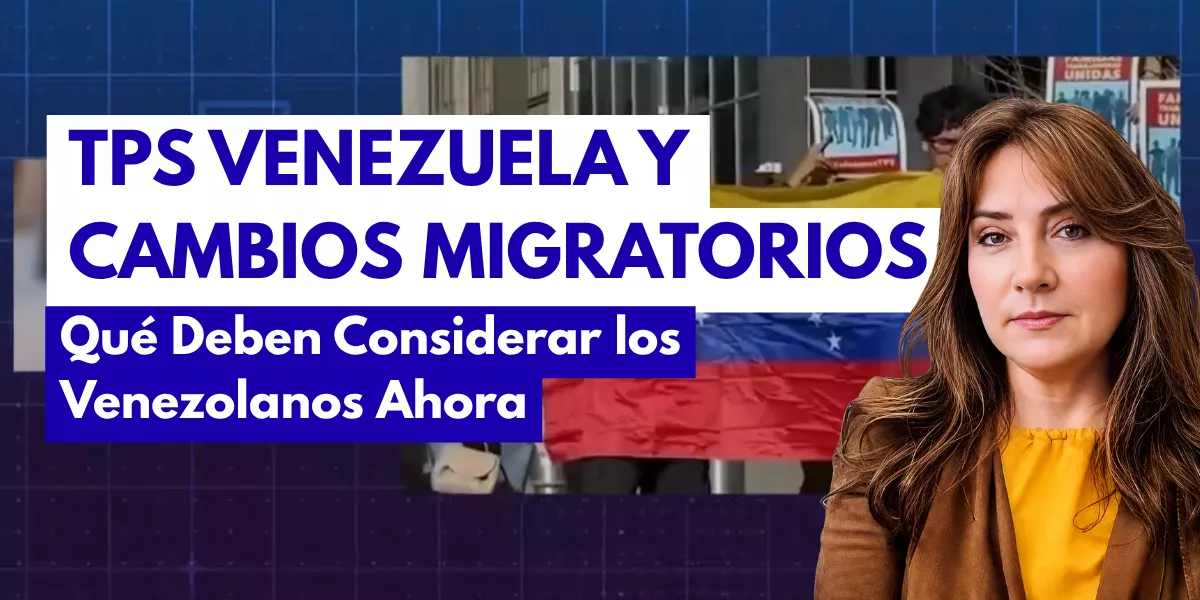
Supreme Court TPS Decision & What TPS Holders Can Do Now

Last Updated: June 30, 2026
The U.S. Supreme Court has issued an important immigration decision involving Temporary Protected Status, commonly known as TPS, for Haitian and Syrian nationals. This decision may affect many families who have been living and working in the United States under TPS protection.
On June 25, 2026, the Supreme Court decided Mullin v. Doe, consolidated with Trump v. Miot, and held that the TPS statute bars judicial review of many non-constitutional challenges to the Department of Homeland Security’s decision to terminate a country’s TPS designation. You can read the official Supreme Court decision here: Mullin v. Doe, 25-1083 and 25-1084.
This does not mean every TPS holder has the same immigration situation. It also does not mean that every TPS holder is without options. But it does mean that affected TPS holders should take this moment seriously and review their immigration history, family connections, employment possibilities, pending applications, and any other legal path that may be available.
At the same time, we are also watching the Supreme Court closely for the pending birthright citizenship ruling in Trump v. Barbara, a separate case involving Executive Order 14160 and citizenship for certain children born in the United States. The official Supreme Court docket for that case is available here: Trump v. Barbara, No. 25-365. I will address that case separately in a full article once the Court issues its final ruling.
What Is Temporary Protected Status?
Temporary Protected Status is a temporary immigration protection available to eligible nationals of certain countries when conditions in those countries make return unsafe or impractical. According to the official USCIS Temporary Protected Status page, TPS may allow eligible individuals to remain in the United States, obtain work authorization, and request travel authorization while the country’s TPS designation remains in effect and while the person continues to meet TPS requirements.
It is important to understand that TPS is temporary. DHS and USCIS have repeatedly stated in official notices that TPS does not, by itself, lead to lawful permanent residence or another immigration status. In the Federal Register notice terminating Syria’s TPS designation, DHS explained that TPS beneficiaries may remain in the United States and work during the designation period, but that “the granting of Temporary Protected Status does not result in or lead to lawful permanent resident status or any other immigration status.” You can review the official Syria notice here: Termination of the Designation of Syria for Temporary Protected Status.
What Did the Supreme Court Decide?
In Mullin v. Doe, the Supreme Court ruled that the TPS statute limits judicial review of many challenges to DHS decisions involving the designation, termination, or extension of TPS for a foreign country. The Court stated that 8 U.S.C. § 1254a(b)(5)(A) bars judicial review of non-constitutional claims connected to those determinations. The official opinion is available here: Supreme Court Opinion: Mullin v. Doe.
The Court also concluded that the Haitian TPS respondents were not entitled to interim relief on their equal protection claim. In practical terms, the decision reverses the lower-court interim relief that had postponed the TPS terminations during litigation.
This ruling is significant because it may affect how courts handle future challenges to TPS terminations for other countries as well. However, each TPS designation, each Federal Register notice, and each person’s immigration history must still be reviewed carefully.
Who Is Directly Affected by This Decision?
This decision directly involved litigation over the termination of TPS designations for Haiti and Syria.
For Haiti, DHS published a Federal Register notice terminating Haiti’s TPS designation effective February 3, 2026. That notice is available here: Termination of the Designation of Haiti for Temporary Protected Status. USCIS also maintains a country-specific page for Haiti TPS updates here: USCIS TPS Haiti.
For Syria, DHS published a Federal Register notice terminating Syria’s TPS designation effective November 21, 2025. That notice is available here: Termination of the Designation of Syria for Temporary Protected Status. USCIS also maintains a country-specific page for Syria TPS updates here: USCIS TPS Syria.
If you are from Haiti or Syria and have TPS, you should not rely only on general news reports. You should check the official USCIS country page, review your notices, and speak with an immigration attorney about your specific situation.
What Happens When TPS Ends?
When a TPS designation ends, the consequences depend on the person’s individual immigration history.
DHS has stated in official Federal Register notices that when a country’s TPS designation is terminated, TPS beneficiaries generally return to the same immigration status or category they had before TPS, if that status still exists, or to another lawful immigration status they obtained while they had TPS. The Federal Register explains this principle clearly in official TPS notices, including the Syria TPS termination notice: Federal Register Syria TPS Termination Notice.
For some people, that may mean they still have another valid immigration status. For others, it may mean they no longer have lawful status after TPS ends. Some may also have pending applications, family petitions, employment-based possibilities, asylum-related claims, or immigration court cases.
That is why a personal legal review is very important. TPS holders should not assume that one answer applies to everyone.
What Can a TPS Holder Do Now in the United States?
The most important step is to review possible immigration options before there is an emergency. Below are several areas that TPS holders may need to evaluate.
1. Review Family-Based Immigration Options
Some TPS holders may have a U.S. citizen or lawful permanent resident spouse, parent, adult child, or other qualifying family member who may be able to file a family-based petition. USCIS provides official information about family immigration here: USCIS Family of U.S. Citizens and here: USCIS Green Card Eligibility Categories.
Family-based options depend on many facts, including how the person entered the United States, whether they were inspected and admitted or paroled, whether they have prior removal orders, whether they have unlawful presence issues, and whether any waivers may be required.
2. Review Adjustment of Status Possibilities
Some people may be eligible to apply for a green card from inside the United States through adjustment of status. USCIS explains the adjustment process here: USCIS Adjustment of Status.
Adjustment of status is not available to everyone. A person’s manner of entry, visa history, family relationship, employment petition, criminal history, immigration violations, and prior orders of removal may all affect eligibility. TPS alone does not automatically create adjustment eligibility, so this should be reviewed carefully.
3. Review Employment-Based Immigration Options
Some TPS holders may have employers who are willing to sponsor them for employment-based immigration. USCIS provides official information about employment-based immigrant categories here: USCIS Permanent Workers.
Employment-based immigration can involve several steps, including employer sponsorship, labor certification in some categories, immigrant petitions, visa availability, adjustment of status, or consular processing. Employers and workers should review the timing carefully because the end of TPS may affect work authorization and long-term planning.
4. Review Asylum or Other Humanitarian Protection
Some individuals may fear return to their country because of persecution, violence, political opinion, religion, nationality, race, or membership in a particular social group. USCIS provides official information about asylum here: USCIS Asylum.
Asylum is a separate legal process from TPS. It has its own deadlines, evidence requirements, risks, and legal standards. People who fear return should not assume that TPS automatically becomes asylum. They should seek legal guidance to understand whether asylum, withholding of removal, Convention Against Torture protection, or another form of relief may apply.
5. Review Any Immigration Court Case
If a TPS holder has ever been in removal proceedings, received a Notice to Appear, missed a hearing, or had an immigration judge issue an order, that history must be reviewed. The Executive Office for Immigration Review provides an official online case information system here: EOIR Automated Case Information.
A prior removal order can create serious complications. It may affect adjustment of status, travel, detention risk, and eligibility for certain applications. Anyone with immigration court history should not wait until TPS ends to review the record.
6. Review Work Authorization and I-9 Issues
TPS work authorization can become complicated when litigation, Federal Register notices, and automatic extensions overlap. USCIS provides official information for employers and employees through I-9 Central here: USCIS I-9 Central.
TPS holders should keep copies of their Employment Authorization Documents, USCIS receipts, approval notices, and any official automatic-extension notices. Employers should be careful to follow official USCIS and I-9 guidance rather than making assumptions based only on news reports.
7. Be Careful With Travel
TPS holders should not travel outside the United States without legal advice. Even when travel authorization is available, travel can create risks depending on a person’s immigration history, prior unlawful presence, removal orders, criminal issues, pending applications, or future adjustment strategy.
USCIS explains that TPS beneficiaries may request travel authorization as a matter of discretion on its official TPS page: USCIS Temporary Protected Status. But permission to request travel authorization does not mean travel is safe for every person.
Call Today for Your Immigration Related Questions
If you have TPS and are concerned about how the Supreme Court decision may affect your future in the United States, legal guidance may help you understand your options before urgent problems arise.
Reach out to our Immigration Law Attorney Martha Arias and her team at Arias Villa, PLLC. Schedule your consultation today and let us help you achieve your immigration goals.
Stay informed. Keep your documents organized. Do not rely on rumors when your family, work authorization, and future may be affected.
What Documents Should TPS Holders Organize Now?
TPS holders should gather and organize important documents, including:
- TPS approval notices
- Employment Authorization Documents
- USCIS receipts
- Passport and identity documents
- I-94 records, if available
- Proof of entry or parole
- Family immigration petitions
- Marriage, birth, divorce, and death certificates
- Tax records
- Employment records
- Criminal court records, if any
- Immigration court documents, if any
- Prior removal orders, if any
- Evidence of residence in the United States
- Any pending USCIS, EOIR, or Department of State filings
Having these records ready can make a legal consultation much more productive and may help avoid delays.
Birthright Citizenship Ruling Watch
Separately, many families are also waiting for the Supreme Court’s decision in the birthright citizenship case, Trump v. Barbara. That case involves Executive Order 14160 and the question of whether the federal government may limit recognition of U.S. citizenship for certain children born in the United States.
The Supreme Court docket for Trump v. Barbara is available here: Trump v. Barbara, No. 25-365. The prior Supreme Court decision in Trump v. CASA, Inc. addressed universal injunctions, but the Court stated that it was not deciding whether Executive Order 14160 violates the Citizenship Clause or federal citizenship law. You can review that official decision here: Trump v. CASA, Inc..
As of this article, we are watching closely for a final Supreme Court ruling in Trump v. Barbara. Families should not assume the law has changed until the Supreme Court issues its final decision and the government provides official implementation guidance. I will address that issue separately in a full article after the Supreme Court decision.
Frequently Asked Questions
Did the Supreme Court end TPS for everyone?
No. The Supreme Court decision involved TPS terminations for Haiti and Syria. However, the decision may affect how future TPS termination challenges are handled because the Court interpreted the TPS statute’s judicial-review limitation broadly. TPS holders from other countries should review the official USCIS TPS country pages and not assume that every country is affected in the same way.
Does TPS automatically lead to a green card?
No. USCIS and DHS have stated in official TPS guidance and Federal Register notices that TPS does not by itself lead to lawful permanent residence or another immigration status. However, some TPS holders may have a separate family-based, employment-based, humanitarian, or other immigration option.
If I have TPS from Haiti or Syria, should I leave the United States immediately?
Do not make that decision based only on general news. Leaving the United States may create serious immigration consequences depending on your case. Before making travel or departure decisions, review your immigration history, work authorization, family petitions, court history, and possible relief with a qualified immigration attorney.
Can I still work if my TPS-related work permit has not expired?
Work authorization depends on your document, country designation, applicable Federal Register notices, and any official USCIS updates. TPS holders should review the official USCIS TPS country page and I-9 guidance. Employers should follow USCIS I-9 Central guidance and avoid making assumptions without checking official instructions.
Can a U.S. citizen spouse or child help a TPS holder apply for a green card?
Possibly, but not always. A qualifying family relationship may help in some cases, but eligibility depends on many facts, including entry history, inspection or parole, unlawful presence, prior removal orders, criminal history, and whether a waiver is needed. Family sponsorship should be reviewed individually.
Can a TPS holder apply for asylum?
Possibly, if the person meets the legal standard and procedural requirements. Asylum is separate from TPS. It requires a fear of persecution based on a protected ground and has important filing rules and evidence requirements. People who fear return should seek legal guidance before filing or delaying action.
What if I already have an immigration court case?
You should check your case status through the official EOIR system and speak with an immigration attorney. Missing a hearing or ignoring a court order can have serious consequences. TPS holders with court history should review their complete immigration record as soon as possible.
Should TPS holders apply for anything right now?
It depends on the person’s facts. Some may need to file a family petition, adjustment application, employment petition, asylum application, motion, waiver, or another request. Others may need to wait for official guidance or gather documents first. The important point is to evaluate options early, not after documents expire or removal risk increases.
Does the TPS decision affect the birthright citizenship case?
No. These are separate legal issues. The TPS decision concerns Temporary Protected Status and judicial review of DHS termination decisions. The birthright citizenship case concerns citizenship for certain children born in the United States. We are watching the birthright citizenship ruling closely and will address it separately.
What is the safest next step for a TPS holder?
The safest next step is to organize your documents, confirm your official TPS country guidance, review whether you have another lawful status or pending case, and seek individualized immigration legal advice. Do not rely only on social media or general headlines.
Conclusion
The Supreme Court’s TPS decision is a serious development for Haitian and Syrian TPS holders and may influence future TPS litigation. But the most important message is this: each person’s case is different.
Some TPS holders may have family-based options. Some may have employment-based options. Some may have asylum-related or humanitarian claims. Some may have immigration court history that must be handled carefully. Others may need waivers or additional legal strategies.
This is not the time to panic, but it is also not the time to wait silently. TPS holders should review their options now, while there may still be time to prepare.
We are also watching the Supreme Court closely for the separate birthright citizenship ruling. Once the Court issues its decision, I will provide a full explanation for immigrant families.
Legal Disclaimer
This article is for general informational purposes only and does not constitute legal advice. Reading this article does not create an attorney-client relationship with Arias Villa, PLLC or attorney Martha L. Arias. Immigration cases depend on individual facts, immigration history, deadlines, documents, court records, government notices, and current law. If you have questions about your specific situation, you should consult with a qualified immigration attorney.

Martha L. Arias, Esq.
Immigration Law Attorney
Dedicated Immigration Attorney for TPS Holders
For professional and dedicated immigration legal services, call immigration attorney Martha Arias at (305) 671-0018 or Schedule your consultation today