What Is the Legal Basis for ICE Enforcement Operations?

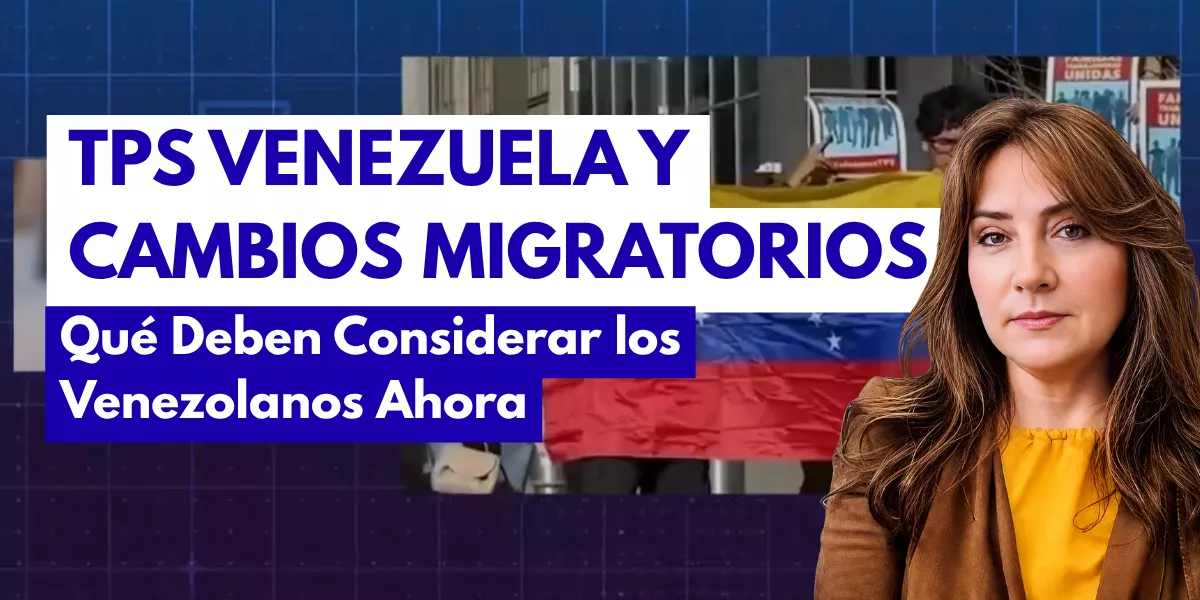
During my recent interview with Globovisión, I was asked whether immigration officers may detain people simply because the president issued a proclamation expanding immigration enforcement.
This is an important question because presidential directives can influence how aggressively immigration laws are enforced. However, a proclamation or executive order does not give immigration officers unlimited authority, nor does it replace the laws enacted by Congress.
Presidential Policy and Legal Authority Are Not the Same
On January 20, 2025, President Donald Trump issued Executive Order 14159, “Protecting the American People Against Invasion.” This order established broad immigration-enforcement priorities and directed federal agencies to use lawful means to identify, detain, and remove certain noncitizens who may be inadmissible or removable under existing immigration law.
The administration also issued the presidential proclamation titled “Guaranteeing the States Protection Against Invasion.” That proclamation primarily addressed entry through the southern border and suspended the entry of certain individuals covered by its terms. It should not be confused with the underlying statutory authority ICE uses when conducting enforcement operations inside the United States.
The distinction is important: presidential directives establish the administration’s enforcement policies and priorities, but ICE’s fundamental authority comes from federal statutes and regulations.
Where Does ICE Receive Its Authority?
The principal statutory authority is found in Section 287 of the Immigration and Nationality Act, codified at 8 U.S.C. § 1357. This law grants designated immigration officers certain powers to question people about their right to be or remain in the United States and, under specific circumstances, to make immigration arrests.
However, this authority has limits.
Under the current federal regulations governing immigration-enforcement activities, an immigration officer may ask questions as long as the officer does not restrain a person who is not under arrest from leaving. To briefly detain someone for questioning, the officer must have reasonable suspicion based on specific and articulable facts that the person may be unlawfully present or involved in a federal offense.
Lea esto en español

An immigration arrest also requires an adequate legal basis. Federal regulations state that a warrant generally should be obtained unless the designated immigration officer has reason to believe that the person is likely to escape before a warrant can be secured.
Therefore, ICE officers do not receive unrestricted authority to stop or arrest people merely because the president announced a stricter enforcement policy.
Can ICE Stop People at Bus Stations or While They Are Driving?
The answer depends on the circumstances surrounding the encounter.
The Fourth Amendment continues to protect people against unreasonable searches and seizures. In the interior of the United States, officers generally cannot forcibly detain someone based only on appearance, language, ethnicity, or an unsupported suspicion.
The U.S. Supreme Court has held that immigration stops conducted by roving patrols must be supported by specific, articulable facts that create reasonable suspicion. The Court has also held that apparent Mexican ancestry, standing alone, is insufficient to justify an immigration stop.
An officer may approach someone in a public place and ask questions without necessarily creating a detention. The legal issue changes when the officer restricts the person’s freedom to leave. At that point, the government must be able to identify a lawful basis for the detention.
The same principle applies to vehicle stops. The fact that a person is driving in an area where immigration operations are occurring does not, by itself, establish reasonable suspicion.
What About ICE Warrants and Private Property?
ICE uses civil administrative warrants, including Form I-200 arrest warrants and Form I-205 removal warrants. These are immigration documents issued through the executive branch; they are different from judicial warrants signed by a federal judge. ICE’s current enforcement guidance explains the purposes of these administrative warrants.
Federal regulations also place separate restrictions on entering nonpublic areas of residences, businesses, and certain other properties. Depending on the circumstances, officers may need appropriate warrant authority, consent from someone authorized to give it, or another legally recognized basis for entry.
For that reason, the existence of an ICE document does not mean that every search, entry, detention, or arrest is automatically lawful. Each situation must be evaluated according to its particular facts.
The Central Point From My Globovisión Interview
The message I wanted to communicate during the interview is that presidential proclamations and executive orders can significantly change immigration-enforcement priorities. Nevertheless, they do not create unlimited enforcement powers.
ICE must act within the authority granted by Congress, applicable federal regulations, and constitutional protections. Whether a specific stop, arrest, search, or entry was lawful depends on what the officers knew, what actions they took, where the encounter occurred, and the person’s individual immigration circumstances.
I thank the Globovisión host and production team for giving me the opportunity to explain this important distinction to their audience. At a time of increased enforcement activity, people should remain informed and avoid making decisions based solely on rumors or generalized information.
Anyone who has been contacted by ICE, has a prior removal order, or believes they may be affected by an enforcement operation should seek legal advice based on their individual immigration history before signing documents or making important decisions.
DISCLAIMER: This article is provided for general informational purposes and does not constitute legal advice. Immigration matters depend on their individual facts, procedural histories, and applicable law. Reading this article does not create an attorney-client relationship.

Martha L. Arias, Esq.
Immigration Law Attorney
Experienced Immigration Law Attorney
For professional and dedicated immigration legal services, reach out to our immigration attorney Martha Arias and her team at Arias Villa, PLLC. Schedule your consultation today and let us help you achieve your immigration goals.