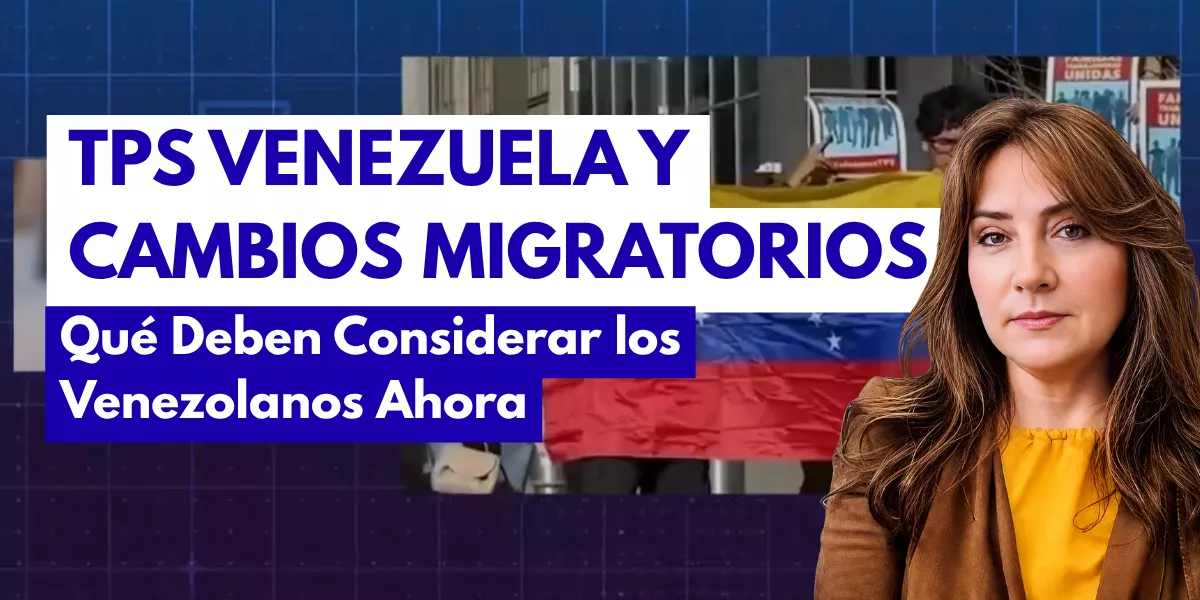
Critical Immigration Updates: Rights, Risks, and Family Protection

Last week, I had the honor of joining Padre Alberto on Poderosa 990 AM to discuss urgent developments in U.S. immigration law. A federal judge has just blocked the recent executive order by President Trump that sought to halt asylum applications at the southern border. This decision is crucial, as it temporarily restores the right for those arriving at the border to request asylum, regardless of how they enter the country. The judge’s ruling allows a 14-day window—from July 2 to July 16—during which individuals may once again submit asylum requests while the government considers an appeal.
We also addressed widespread concerns about the sharing of Medicaid and health information between states and federal immigration authorities. Many states are now suing the federal government over confidentiality and the use of funds, reflecting just how complicated immigration issues have become.
Most importantly, we talked about the fears facing so many immigrant families: the risk of detention, the uncertainty of temporary protections like TPS and DACA, and—perhaps most distressing—the anxiety about what could happen to children if their parents are suddenly detained or deported. If you have U.S. citizen children, now is the time to get their passports and ensure a trusted friend or family member is authorized to care for them in an emergency. Proper legal documentation, signed and notarized, is essential for your children’s protection.
If you have questions about your immigration status or family safety, I encourage you to reach out to a qualified attorney who can help you prepare and safeguard your loved ones. For help, you can always contact my office at (305) 671-0018 or reach out to me on social media.
FOLLOW ME ON SOCIAL MEDIA
SPANISH TRANSCRIPT:
Padre Alberto:
Señores, muy buenos días, gracias por estar con nosotros. En las noticias hoy hay mucho que hablar. Yo quiero invitar a la doctora Martha Arias, es abogada especialista en el tema de inmigración, que nos hable en los minutos en este programa sobre todas las noticias del día. Doctora, buenos días, ¿cómo está?
Abogada Martha Arias:
Muy buenos días, un saludo para usted y toda su audiencia en este día lluvioso hoy.
Padre Alberto:
Ay sí, pasado por agua. Lleve su sombrilla, por favor, doctora, no se moje. Bueno, le voy a decir, doctora, un juez frena orden del presidente Trump para restringir el asilo en la frontera. Explíqueme esa noticia, ¿de qué se trata esto?
Abogada Martha Arias:
Sí, efectivamente, a principios de este año, creo que fue el 20 de enero, si no estoy mal, el presidente Trump anunció una orden ejecutiva, sí, efectivamente fue el 20 de enero, donde dijo que los inmigrantes que llegaban a la frontera eran considerados como una invasión y, por lo tanto, no podían hacer peticiones de asilo, presentar sus peticiones de asilo.
Padre Alberto:
Eso se estaba haciendo por teléfono, ¿verdad? ¿Se estaba haciendo de una forma móvil o estoy equivocado?
Abogada Martha Arias:
¿No le entendí la pregunta?
Padre Alberto:
Había una forma como que la gente pedía citas por el celular, para que le aprobaran el asilo, ¿algo de eso?
Abogada Martha Arias:
Sí, bueno, sí, es una aplicación que el presidente Biden empezó que se llama CBP One, donde las personas entraban, hacían un registro y pedían una cita para llegar a la frontera a pedir su asilo, correcto.
Padre Alberto:
¿Ya eso se acabó ya?
Abogada Martha Arias:
El presidente Trump lo terminó a través de esta orden ejecutiva. Dijo que esas personas que se acercaban a la frontera no podían pedir asilo. Y terminó con esa aplicación CBP One.
Padre Alberto:
Entonces, legalmente, ahora ¿cómo una persona pide asilo?
Abogada Martha Arias:
Bueno, sí, entonces ahí va la información de contexto para que me entiendan el anuncio del juez. Entonces viene una asociación pro-inmigrantes y presentan una demanda en Washington D.C. pidiendo que se declarara inconstitucional esa orden ejecutiva del presidente. Porque se consideraba que era inconstitucional porque las personas, según el estatuto de inmigración y según la ley, pues tienen ese derecho a pedir ese asilo. El juez, el día de ayer, salió ayer, ese juez de Washington, el juez Radolf Moos, emite una orden donde dice que esa decisión o esa orden ejecutiva del presidente es inconstitucional y no tiene fundamento legal. Por lo tanto, a partir de ayer hasta el 16 de julio de este mes, o sea, desde este año, las personas que se acercaran o que se pudieran acercar a la frontera pudieran aplicar para asilo; porque el juez da un margen de tiempo de 14 días para que si el gobierno quiere apelar, apele. Entonces, en esta ventana de tiempo, es decir, desde ayer 2 de julio hasta el 16 de julio (14 días), las personas que lleguen a la frontera pudieran hacer peticiones de asilo basadas en esta decisión del juez del día de ayer.
El juez dice, entre otras cosas, que las personas pueden pedir asilo, no importa la forma en que entren. O sea, en otras palabras, como que hace una diferenciación de por qué una persona que entra por el aeropuerto podría pedir asilo, pero una persona que entra por la frontera no. Entonces el juez dice que no hay nada en la ley que limite que uno lo pueda hacer y el otro no.
Entonces, ese es uno de los argumentos en soporte a su decisión. El otro argumento dice que solamente la Constitución y las leyes federales son las que determinan esta ley o política migratoria, que el presidente no puede pasar por el Congreso para tomar estas decisiones sobre el asilo porque es un derecho que está en la ley de inmigración, perdón.
Padre Alberto:
Ahora también, doctora, hay 20 estados de la nación. Recordemos que hay 50 estados en Estados Unidos de América. Se pudiera decir que casi más de un 40 por ciento de los estados han demandado al gobierno federal por compartir datos de Medicaid, o sea, el sistema de Medicaid con el sistema de inmigración. Cuénteme, ¿qué está pasando ahí?
Abogada Martha Arias:
Sí, los estados. Pues lo que pasa es que esto es complicado y esa parte yo no me siento competente para decir si es correcta, no me imagino que es correcta la demanda, pero como todos sabemos el Medicaid y el Medicare es manejado por los estados, definitivamente, o sea, los estados son los que administran esos programas. Sin embargo, los dos programas, tanto el Medicare como el Medicaid, reciben fondos federales.
Ahora, la cantidad de fondos federales que cada uno de estos programas recibe es lo que yo no sé. Pero entonces, el estado, al ser el que administra el programa, es obviamente el estado el que tiene esa información de quién está recibiendo ese Medicaid. Y esa es la información que le están dando al gobierno federal. Entonces, la pregunta es que…
Padre Alberto:
Específicamente, doctora, al Departamento de Homeland Security, o sea que se está compartiendo información que es altamente confidencial, que tiene que ver con la salud de las personas. Se sabe que aquí hay leyes muy estrictas. Por ejemplo, yo llamo a un doctor, yo llamo a una oficina de una medicina o de algo del seguro. Yo quiero ayudar a mi esposa, por ejemplo, y quiero hablar de la salud de mi esposa y a mí no me autorizan si ella no lo ha autorizado. O sea, es tan estricto como eso. Si la persona no ha dado autorización de compartir la información de su salud con su esposo, su esposa, hasta con su propio médico, esa información no se puede compartir. Bueno, en este caso estos 20 estados están diciendo que se ha permitido que Medicaid, escuchen, que Medicaid tenga acceso a información médica sobre personas sin la autorización de las personas ni el sistema de Medicaid. O sea, que una cosa que siempre ha estado protegida por la confidencialidad que hay en un tema de la salud. Entonces ahora esto está fuerte. Eso está fuerte.
Abogada Martha Arias:
Exacto. Y otra noticia que vi también relacionada con 20 estados. No sé si es la misma demanda, la verdad. Demandaron al gobierno federal también por usar los fondos destinados a desastres públicos y transporte, como transporte, como es el FEMA, para el forzamiento de la ley de migración, que este es el centro nuevo de detención que se hizo aquí en la Florida, el Alcatraz, que se usaron dinero supuestamente de FEMA y del Departamento de Transporte para crearlo. Entonces, estos estados también están demandando y son Colorado, Connecticut, Delaware, Hawaii, Maine, Massachusetts, Michigan, Minnesota, Nevada, New Mexico, New York, Oregon, Washington, Wisconsin y Vermont. Ellos consideran que este uso también de esos dineros federales para el centro de detención o para el forzamiento de la inmigración no es correcto. Eso también es una demanda que existe por 20 estados.
Padre Alberto:
Bueno, doctora, lo que la gente quizás no sabe es que aquí todo se complicó en la época que se instituyó el HIPAA. Se sabe que el HIPAA, la Health Insurance Portability and Accountability Act, el HIPAA. Yo como sacerdote, por ejemplo, si voy a visitar un enfermo al hospital, a mí esa información del paciente no me la dan, a no ser que la familia haya dicho, el padre Alberto está autorizado para saber esta información, tienen que firmar un papel y decir, con la ley HIPAA, él está autorizado. Pero si tú no estás autorizado, incluso a veces estoy llamando a un hospital, tú no puedes ni saber si tú no tienes el nombre del paciente. Tú no puedes decir, ah, el paciente tal, yo estoy buscando una persona. No, no, no. Tú tienes que ser autorizado para tener información sobre esa persona. Si esa persona está en hospital, si está grave, si no está grave, si se está muriendo. Si no, antes yo llamaba a un hospital y podía hablar con la enfermera inmediatamente y la enfermera me daba información sobre el estado del paciente. Y eso se cambió después de la ley HIPAA. La ley HIPAA lo que hace es que protege al paciente de que su información aún salga al público. Así que imagínense que este caso es con el gobierno federal y lo están usando con el tema de las deportaciones. Obviamente ese es el gran tema.
Hoy 3 de julio, un día que es la vigilia de la independencia de los Estados Unidos de América. ¿Cuál es la complicación más grande en este momento para la mayoría de nuestros clientes en el tema de inmigración? ¿Cómo usted lo ve? Usted trabaja en esto todos los días.
Abogada Martha Arias:
Bueno, lo que veo es mucho miedo, mucho temor, mucha incertidumbre, angustia de las personas. Las personas tienen mucho temor de lo que pueda ser su futuro migratorio, particularmente aquellos que tienen unos estatus de protección temporal. Obviamente, los que están indocumentados siempre han vivido con la zozobra de estar indocumentados. Ahora, obviamente, se hace más grave porque obviamente las leyes migratorias están siendo enforzadas de una forma más fuerte.
Pero también los que tienen protección temporal como TPS, como DACA, esas personas también tienen mucho temor. Esa es la primer temor. El temor dos es el temor de ser detenidos en centros de detención, pues como los que están mostrando, el Alcatraz, o que sean enviados a terceros países, como El Salvador y como esos otros terceros países de África que acordaron con el gobierno federal recibir inmigrantes deportados de acá.
Ese es otro temor que tiene la gente. El tercer temor muy muy sentido es el de los hijos. Hay personas indocumentadas que tienen hijos ciudadanos americanos, hijos menores de edad, y tienen miedo de que en algún momento que sean detenidos, pues sus hijos queden desprotegidos, a la deriva, sin saber con quién quedarse.
Yo diría que esos tres, más que incluso la parte financiera, obviamente la gente se preocupa si tiene propiedades, casas, qué va a pasar con su casa, qué va a pasar con sus propiedades si les pasa algo. A lo último se convierte en el menos problemático de los dilemas. El dilema mayor son esos tres que menciono, sobre todo el de los hijos. Por eso yo le digo a las personas que es momento de que hablen con un abogado de familia, cómo proteger a sus hijos, cómo determinar si, por ejemplo, como ha pasado mostrando en la noticia, creo que la semana pasada, una señora que fue deportada con su hija mayor, pero la hija menor, un bebé que tenía como tres años, no se lo dejaron llevar, no se lo dejaron recibir, que era ciudadano americano, obviamente. Entonces, ahora ese bebé está con una familia mientras procesan cómo lo mandan. Pero acuérdense que los niños, para sacar un pasaporte de un niño americano, necesita la firma de los dos padres. Si no hay la firma de los dos padres, hay que seguir ciertas reglas que tiene el departamento de pasaportes o la agencia de pasaportes. Entonces, este es el momento para que esas personas tomen control de eso. Pídanle el pasaporte a sus hijos ahora que están aquí, que están libres, que pueden firmar. Sáquenle el pasaporte. Cosa de que, en alguna cosa mala pase, Dios no lo quiera, los deporten, por lo menos ese niño tenga un pasaporte, haya un familiar o un amigo cercano que pueda coger el niño con su pasaporte, ya con previa autorización escrita, notarizada, y llevar ese hijo a su mamá o a su papá, su país de padres. Esas son cosas que se tienen que ir haciendo. Lo de los pasaportes y lo de determinar, autorizar. Si va a haber un familiar o un amigo que es el que va a ser encargado, ese familiar o amigo debe tener un documento firmado y notarizado donde diga que está autorizado a sacar ese niño de los Estados Unidos porque nadie va a querer sacar un niño de aquí si no lo autorizan por escrito, qué miedo, es como si se estuviera robando un niño, ¿no?
Entonces todo eso tiene que estar legalizado, busquen un abogado de familia que los aconseje, hagan toda esa documentación, que eso minimiza esa ansiedad, por lo menos saben que están seguros, que tienen un plan para llevarse a sus hijos en caso de que pase una eventualidad de esto.
Padre Alberto:
Bueno, doctora, le agradezco tanto este tiempo y toda su sabiduría. Espero que la gente escuche. Señores, si ustedes están en una situación de esa, o un ser querido está en situación de esa. Este es el momento para buscar orientación. Háganlo con un profesional. Gracias, doctora.
Abogada Martha Arias:
Gracias a ustedes. Feliz día. Hasta luego.
ENGLISH TRANSCRIPT:
Padre Alberto:
Ladies and gentlemen, good morning, thank you for being with us. There is a lot to talk about in the news today. I want to invite attorney Martha Arias, a lawyer specializing in immigration, to tell us in these minutes on this program about all the news of the day. Attorney, good morning, how are you?
Attorney Martha Arias:
Very good morning, greetings to you and all your audience on this rainy day today.
Padre Alberto:
Oh yes, it’s pouring. Bring your umbrella, please, attorney, don’t get wet. Well, let me tell you, attorney, a judge has stopped President Trump’s order to restrict asylum at the border. Explain this news to me, what is this about?
Attorney Martha Arias:
Yes, indeed, at the beginning of this year, I think it was January 20, if I’m not mistaken, President Trump announced an executive order, yes, indeed it was January 20, where he said that immigrants arriving at the border were considered an invasion and, therefore, could not make asylum requests, could not present their asylum applications.
Padre Alberto:
That was being done by phone, right? Was it being done in a mobile way or am I mistaken?
Attorney Martha Arias:
I didn’t understand the question?
Padre Alberto:
There was a way, like people would request appointments through their cell phone, to get asylum approved, something like that?
Attorney Martha Arias:
Yes, well, yes, it’s an application that President Biden started called CBP One, where people would go in, register, and request an appointment to come to the border and request asylum, correct.
Padre Alberto:
That’s over now?
Attorney Martha Arias:
President Trump ended it through this executive order. He said that those people who approached the border could not request asylum. And he ended that CBP One application.
Padre Alberto:
So, legally, now how does a person request asylum?
Attorney Martha Arias:
Well, yes, so there goes the background information so that you understand the judge’s announcement. So a pro-immigrant association comes and files a lawsuit in Washington D.C. asking for that executive order from the president to be declared unconstitutional. Because it was considered unconstitutional since people, according to the immigration statute and according to the law, have that right to request asylum. The judge, yesterday, yes, that judge from Washington, Judge Radolf Moos, issued an order saying that that decision or that executive order from the president is unconstitutional and has no legal basis. Therefore, starting yesterday until July 16 of this month, that is, from this year, people who approach or who can approach the border can apply for asylum; because the judge gives a margin of 14 days so that if the government wants to appeal, it can appeal. So, in this window of time, that is, from yesterday, July 2, until July 16 (14 days), people who arrive at the border can make asylum requests based on this judge’s decision from yesterday.
The judge says, among other things, that people can request asylum, no matter how they enter. In other words, he makes a differentiation as to why a person who enters through the airport could request asylum, but a person who enters through the border could not. So the judge says there is nothing in the law that limits one from being able to do it and the other not.
So that’s one of the arguments supporting his decision. The other argument says that only the Constitution and federal laws determine this immigration law or policy, that the president cannot bypass Congress to make these decisions about asylum because it’s a right that is in the immigration law, sorry.
Padre Alberto:
Now also, attorney, there are 20 states in the nation. Let’s remember there are 50 states in the United States of America. You could say that almost more than 40 percent of the states have sued the federal government for sharing Medicaid data, that is, the Medicaid system with the immigration system. Tell me, what’s happening there?
Attorney Martha Arias:
Yes, the states. Well, what happens is that this is complicated and on that part I do not feel competent to say if it’s correct, I can’t imagine if it’s correct, but as we all know Medicaid and Medicare are managed by the states, definitely, that is, the states are the ones who administer those programs. However, both programs, Medicare and Medicaid, receive federal funds.
Now, the amount of federal funds each of these programs receives is what I don’t know. But then, the state, being the one that administers the program, is obviously the state that has the information about who is receiving that Medicaid. And that is the information they are giving to the federal government. So, the question is that…
Padre Alberto:
Specifically, attorney, to the Department of Homeland Security, that is, information is being shared that is highly confidential, that has to do with people’s health. You know that there are very strict laws here. For example, I call a doctor, I call a medical office or some insurance office. I want to help my wife, for example, and I want to talk about my wife’s health and they won’t authorize me unless she has authorized it. That’s how strict it is. If the person hasn’t authorized sharing their health information with their husband, wife, or even with their own doctor, that information cannot be shared. Well, in this case, these 20 states are saying that it has been allowed for Medicaid, listen, for Medicaid to have access to medical information about people without the authorization of the people or the Medicaid system. That is, something that has always been protected by confidentiality in the health field. So now, this is strong. That’s strong.
Attorney Martha Arias:
Exactly. And another piece of news I saw also related to 20 states. I don’t know if it’s the same lawsuit, honestly. They sued the federal government as well for using funds intended for public disasters and transportation, like transportation, like FEMA, for the enforcement of immigration law, which is this new detention center that was made here in Florida, Alcatraz, that supposedly money from FEMA and from the Department of Transportation was used to create it. So, these states are also suing, and they are Colorado, Connecticut, Delaware, Hawaii, Maine, Massachusetts, Michigan, Minnesota, Nevada, New Mexico, New York, Oregon, Washington, Wisconsin, and Vermont. They consider that this use of those federal funds for the detention center or for immigration enforcement is not correct. That’s also a lawsuit that exists by 20 states.
Padre Alberto:
Well, attorney, what people may not know is that everything got complicated here when HIPAA was instituted. You know that HIPAA, the Health Insurance Portability and Accountability Act, HIPAA. As a priest, for example, if I go to visit a sick person in a hospital, that patient’s information isn’t given to me unless the family has said, Father Alberto is authorized to know this information, they have to sign a paper and say, with the HIPAA law, he is authorized. But if you’re not authorized, sometimes even when I’m calling a hospital, you can’t even know if you don’t have the patient’s name. You can’t say, oh, the patient such-and-such, I’m looking for a person. No, no, no. You have to be authorized to have information about that person. If that person is in the hospital, if they’re in serious condition, if not, if they’re dying. If not, before I would call a hospital and could immediately speak with the nurse and the nurse would give me information about the patient’s condition. And that changed after the HIPAA law. HIPAA law protects the patient so that their information doesn’t go out to the public. So imagine that in this case, it’s with the federal government and they’re using it with the issue of deportations. Obviously, that’s the big issue.
Today, July 3, a day that is the eve of the independence of the United States of America. What is the biggest complication right now for most of our clients in the immigration issue? How do you see it? You work on this every day.
Attorney Martha Arias:
Well, what I see is a lot of fear, a lot of anxiety, a lot of uncertainty, anguish of people. People are very afraid of what their immigration future may be, particularly those who have some sort of temporary protection status. Obviously, those who are undocumented have always lived with the anxiety of being undocumented. Now, obviously, it becomes more serious because, obviously, immigration laws are being enforced in a stronger way.
But also those who have temporary protection like TPS, like DACA, those people are also very afraid. That’s the first fear. The second fear is the fear of being detained in detention centers, like the ones they’re showing, Alcatraz, or being sent to third countries, like El Salvador and those other African countries that agreed with the federal government to receive immigrants deported from here.
That’s another fear people have. The third very deep fear is about the children. There are undocumented people who have American citizen children, minor children, and they are afraid that at some point if they are detained, their children will be left unprotected, adrift, without knowing who to stay with.
I would say those three, more than even the financial part, obviously people worry if they have property, houses, what’s going to happen with their house, what’s going to happen with their properties if something happens to them. In the end, it becomes the least problematic of the dilemmas. The main dilemma is those three that I mention, especially about the children. That’s why I tell people that it’s time to talk to a family lawyer, how to protect their children, how to determine if, for example, as happened showing in the news I think last week, a lady who was deported with her older daughter, but the younger daughter, a baby who was about three years old, they didn’t let her take her, didn’t let her receive her, who was obviously an American citizen. So now that baby is with a family while they process how to send her. But remember that children, to get a passport for an American child, need the signatures of both parents. If there is not the signature of both parents, you have to follow certain rules that the passport department or the passport agency has. So this is the time for those people to take control of that. Get your children’s passport now that they’re here, that they’re free, that you can sign. Get the passport. So that if something bad happens, God forbid, they deport you, at least that child has a passport, there is a family member or a close friend who can take the child with the passport, already with prior written, notarized authorization, and take that child to his or her mother or father, to their parents’ country. Those are things that have to be done. The passports and the authorizations. If there is going to be a family member or a friend who is going to be in charge, that family member or friend must have a signed and notarized document stating that they are authorized to take that child out of the United States because nobody is going to want to take a child out of here if it’s not authorized in writing, it’s scary, it’s as if they were kidnapping a child, right?
So all that has to be legalized, look for a family lawyer to advise you, do all that documentation, that minimizes that anxiety, at least you know you are safe, that you have a plan to take your children in case something like this happens.
Padre Alberto:
Well, attorney, I thank you so much for this time and all your wisdom. I hope people listen. Ladies and gentlemen, if you are in a situation like that, or a loved one is in a situation like that, this is the time to seek guidance. Do it with a professional. Thank you, attorney.
Attorney Martha Arias:
Thank you all. Have a nice day. Goodbye.