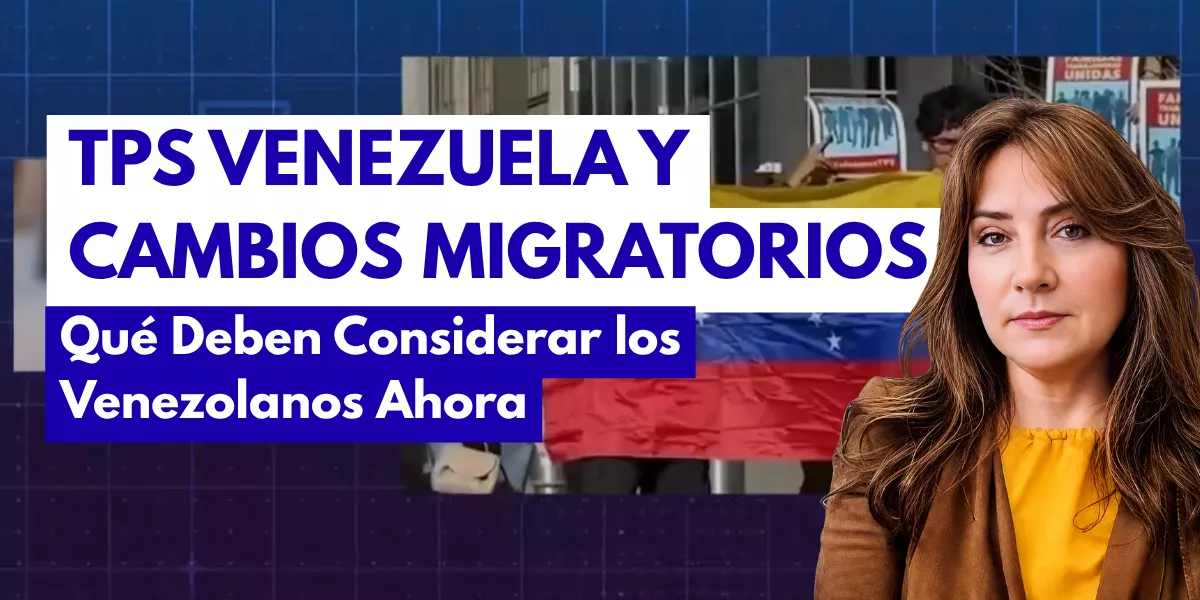
Two Major Court Decisions Bring Hope for Immigrants in the U.S.

As many of you know, this week I had the opportunity to speak on América Radio about two recent and very important court decisions affecting our immigrant community.
The first decision came from a federal judge in New Hampshire, who blocked President Trump’s executive order that would have taken away birthright citizenship for children born in the U.S. to undocumented parents. Thanks to this judge’s ruling, those children will continue to have the right to U.S. citizenship—for now, the executive order has no effect. This is a crucial reminder of the power of the courts and the importance of class action lawsuits, which can have national impact and protect entire groups.
The second big news is that the Supreme Court paused the controversial Florida law SB 4C, which would have made it a state crime for undocumented immigrants to enter Florida. I see this decision as a positive step. Turning immigration issues—traditionally handled at the federal level—into criminal matters with potential jail time raises serious constitutional and human rights concerns. For now, the law is paused, but the legal battle continues and either side may appeal all the way to the Supreme Court.
We also discussed the troubling conditions reported at the so-called “Alligator Alcatraz” immigration detention center in Florida. As an attorney, I believe all detainees are entitled to basic human rights and safe, sanitary conditions, regardless of their immigration status. If you or a loved one are affected by detention or are awaiting court dates, it’s critical to consult a competent attorney, avoid any infractions, and always keep your documents with you—especially proof that you have been in the U.S. for over two years.
Stay tuned, as many immigration decisions are happening quickly and can change the lives of thousands of families. If you have questions or feel uncertain about your immigration case, don’t hesitate to contact my office at (305) 671-0018 or follow me on social media.
FOLLOW ME ON SOCIAL MEDIA
SPANISH TRANSCRIPT:
Orian Brito:
Hola amigos, un placer saludarles. Gracias por acompañarnos, por ser parte del canal, por seguir aquí este espacio y además lo que hacemos también en América Radio con temas de inmigración que son de gran interés para el mundo. Y me acompaña la abogada de Inmigración Martha Arias porque el gobierno sigue en este discurso contra la inmigración ilegal ejerciendo algunas acciones y mientras esto ocurre la justicia ha tomado decisiones importantes. En menos de una semana hay dos decisiones que sacuden el poder. Uno directo con el deseo de Trump de eliminar la ciudadanía por nacimiento de hijos indocumentados luego de que un juez federal bloqueara esta orden ejecutiva por considerarla inconstitucional y peligrosa. Y el otro es cortesía de la Corte Suprema que frenó el intento del gobernador de la Florida Ron DeSantis que tenía planes de convertir a Florida en un campo minado para los inmigrantes indocumentados. Como lo dije, me acompaña la abogada de inmigración Martha Arias para entender porque estos fallos son importantes, el impacto que tienen y cómo la justicia, esta lucha entre el gobierno federal y el Poder Judicial está en pleno desarrollo y les agradezco a ustedes para que sean parte de la conversación, del debate y por supuesto dejen sus ideas.
Abogada, podemos decir que los inmigrantes han ganado una con estas dos decisiones. No sé si quiere comenzar hoy con lo de la Corte Suprema. Porque había muchos desde que llegó al poder, Trump decía que quería frenar el tema de que indocumentados, hijos de indocumentados obtuvieran la ciudadanía. Afirmó una orden ejecutiva. Esto llegó a la Corte Suprema. ¿Qué implica la decisión de hoy de este juez de New Hampshire?
Abogada Martha Arias:
Bueno, la decisión implica que esos niños que nazcan en los Estados Unidos, es decir, van a estar afectados por esta obviamente esta ley del presidente Trump estos niños pueden continuar recibiendo su ciudadanía en los Estados Unidos.
La ley lo que hizo esta decisión del juez es pausar, es decir, que no se aplique una medida ejecutoria para que no se aplique la orden ejecutiva del presidente Trump que le quitaba ese derecho a los niños que nacen en los Estados Unidos de padres indocumentados.
Entonces, por ahora esa ley no tiene efecto, no se puede, o esa orden ejecutiva, más bien porque no es una ley, es una orden ejecutiva, en este momento no tiene una aplicación, no se puede aplicar.
Orian Brito:
El gobierno, sin duda, yo creo que va a apelar.
Abogada Martha Arias:
Seguramente, seguramente el gobierno va apelar, pero aquí hay algo importante, quiere decir, para que las personas que están siguiendo este tema, entiendan. No sé si se acuerdan que la semana pasada la Corte Suprema de los Estados Unidos emitió una decisión. Le dijo, entre otras cosas, que los jueces federales no podían emitir decisiones o estas órdenes que tuvieran efecto en todo el país o a nivel nacional. Esas órdenes solamente iban a tener efecto en el Estado, donde se hacían y para las partes demandadas.
Sin embargo, esta nueva orden de hoy, julio 10 del juez de New Hampshire, tiene un impacto en todos los Estados Unidos nuevamente. la gente debe estar haciéndose la pregunta, pero ¿por qué esta orden el juez la emite teniendo impacto para todo el país si la Corte Suprema la semana pasada dijo que los jueces no lo podían hacer?
Y la razón más importante de esta decisión es que el juez aceptó como un “class action” o certificó, es palabra correcta, como class action esta demanda que se presentó en New Hampshire. Y el class action es una demanda de grupo, una demanda donde se unen varios demandantes que pueden vivir en estados distintos y presentan esa demanda ante la corte. Ahora, en un class action pueden entrar muchas, personas, todas las personas que se crean que pueden estar afectadas por esto entran dentro de esa demanda de class action. Esa es la diferencia entre esta decisión que se emite dentro de algo que está certificado como un class action y la demás y la decisión del juez de perdón de las cortes suprema de la semana pasada.
Orian Brito:
Ok, entonces vamos a esperar por el momento este plazo de siete días, esa persona que pudieran verse afectadas por la aplicación de esta orden ejecutiva pueden respirar de momento y por supuesto ver esa batalla judicial que se mantiene no solo por este tema sino por tantos, ¿no? en las cortes.
Abogada Martha Arias:
Correcto, es una batalla judicial interesante, pero es importante por lo menos que exista esta class action, esta demanda del grupo y esta pausa. Porque cuántos niños nacen en los Estados Unidos, bueno no, no están naciendo tanto porque la gente hoy en día no quiere tener muchos hijos.
Orian Brito:
Son muchos compromisos.
Abogada Martha Arias:
Pocos que nazcan, por lo menos van a tener un alivio y tienen que estar informados esos padres para unirse a esa demanda del grupo.
Orian Brito:
Perfecto. Ahora voy con la Corte Suprema. Increíblemente, porque esa Corte Suprema ha tenido una inclinación 6 a 3 en la mayoría de las decisiones que tienen que ver con temas migratorios. Pero ha decidido por ahora un freno a la polémica ley. La ley es la SB 4C de Florida, que es una de las legislaturas más agresivas en contra de la inmigración ilegal que convertía en un crimen estatal la entrada de un inmigrante en documentado al estado de la Florida. La corte no dio muchas explicaciones, pero negó la implementación o por lo menos pausó la implementación de esta legislación. Cómo ve esta decisión abogada?
Abogada Martha Arias:
Yo esta decisión la veo con buen oso; porque cuando ya pasamos a un palano criminal o penal en el que se va a penalizar con cárcel porque sabemos que los delitos penales o los delitos criminales tienen cárcel o pueden llevar a una cárcel, cuando se va a penalizar con cárcel a personas que están indocumentadas o que entran indocumentadas al estado de la Florida después de haber entrado indocumentadas al país. Ya es una violación muy grande. No solamente es lo que aduce la parte demandante una posible violación al derecho a la Constitución porque el derecho migratorio siempre se ha considerado un tema federal, no estatal. No solamente ese es un buen argumento, sino hasta qué punto esto es un trato cruel inhumano para una violación administrativa como es entrar sin documento. Y en tercer lugar, la privación de la libertad de una persona es uno de los derechos humanos más grandes que existen.
Entonces, privar de la libertad de una persona por una violación de estas amerita una revisión muy cuidadosa de las portas. Yo pienso que esta demanda va a continuar, pero acuérdese que aunque esta decisión lo que hizo fue continuar con la pausa de la aplicación de la ley, quiere decir que esta ley por ahora la prioridad no se puede aplicar, pero la demanda continúa. Entonces, yo lo que creo que va a pasar es que cualquiera que sea la decisión a favor o en contra de la parte demandante, eh alguna de las dos partes que pierda va a poder apelar. Ajá. También si pierde la apelación van a poder ir otra vez a la corte supremo. O sea que esto, como dicen por el GIF, se extiende. Esto yo creo que va a continuar. Por ahora las personas pueden estar tranquilos.
Orian Brito:
Increíblemente, mientras hablamos de una pausa de una ley en este estado, particularmente la que estamos hablando de Florida, está la cárcel “Alligator Alcatraz”. Esta polémica cárcel que ha sido noticia esta semana lo de que varias personas que están dentro denuncian que las condiciones en las que están detenidos son condiciones infrahumanas. Hemos escuchado audios que dicen que el aire acondicionado es helado, no les dan comida, sino un sanduchito es lo que dicen, no hay medicinas, la electricidad se va, etcétera. La alcaldesa del condado pidió a las autoridades estatales, porque esta cárcel tiene, este centro de detención migratorio tiene el control, el estado de la Florida pidió que se le permitiera el acceso para que ella pueda constatar la situación. Se le negó esta posibilidad. Pero curiosamente hoy tenemos información de que hay abogados que denuncian que no han tenido acceso a sus clientes que están allí. Cuando hablamos de derechos humanos, porque cuando yo leo los comentarios aquí en el canal y la gente cuando hemos compartido en la radio, al final todo el mundo está de acuerdo con que se ponga orden a la inmigración. y que cualquier inmigrante que comete un delito pague por ello. Eso no es el tema en discusión, pero las condiciones también es un factor importante porque no por cometer un delito eso, o sea, tú puedes ser víctima de otro, tú pierdes derechos, ¿Cómo ve esta situación que se está dando con esta cárcel que a muchos los tiene preocupado no solo en el estado sino a nivel nacional?
Abogada Martha Arias:
Sí, efectivamente, ver, sí veo con preocupación porque como como abogada que soy, uno jura que cumplir la ley y la constitución de los Estados Unidos. Y una, y la ley incluye muchas cosas, incluye leyes administrativas. Mientras una persona está bajo la detención o la custodia del Estado o federal o del gobierno federal, persona tiene que tener unas garantías de que su vida está protegida, de que ciertas cosas. No es que le vamos a dar un hotel de cinco o diez estrellas, obviamente que no.
Orian Brito:
Exactamente.
Abogada Martha Arias:
Tampoco es, pero tampoco vamos a ir a los dos extremos. No ni es un hotel de cinco o diez estrellas, pero tampoco pueden ser unas condiciones que puedan crear, por ejemplo, enfermedad o la posibilidad de muerte, o la inhabilidad de una asistencia o una defensa para ellos. Entonces, sí, esa es preocupante. Lo que he escuchado, gracias a Dios, yo no tengo ninguna persona atendida ya, pero lo que he escuchado es que Esto está en este momento en revisión porque las personas argumentan que no tienen agua, que no se puede lavar sus dientes, que las luces están prendidas todo el tiempo, de día y de noche, que los mosquitos son… la situación con los mosquitos es bien fuerte. Eso es que he leído y reporta muchas personas. Entonces, pues yo no sé, Orián, Qué futuro va a esta este centro de detención. Lo que usted dijo es cierto, aparentemente la alcaldesa trató de entrar y no ha podido. Entonces, bueno, vamos a esperar a ver cómo se desarrolle esto, lo que uno más quiere en este momento es que ninguno de sus clientes, los clientes de nosotros, ninguna persona vaya a ser detenida ya.
Orian Brito:
Cuando un cliente se derretió, disculpa que le interrumpe a abogada, ¿cómo se lucha por esa defensa? Cuando usted tiene un cliente que está bajo el poder de ICE y no le permiten. Oye, es un proceso, Si es difícil en una cárcel cercana a la que usted tenga acceso, imagínese en “Alligator Alcatraz”, que hay que manejar como una hora el acceso, por supuesto, mucho más restringido.
Abogada Martha Arias:
Hasta donde tengo entendido por ahora, no hay acceso físico a llegar allí por parte de su abogado. Lo que creo que se está hablando era de un acceso telefónico, pero por ahora tampoco sé en ese momento si el acceso físico también se está programando o sea posible más adelante pero es complicado, es complicado y yo creo que vamos a estar escuchando de este centro de atención por los próximos meses para ver cada vez o cómo lo mejora o cómo solucionan el problema grave sobre todo de agua, de higiene porque ok, Si una persona no tiene agua por tres días pero el agua viene, pues ok, ¿cuánto tiempo van a estar sin agua? ¿Cuánto tiempo van a estar sin poder hacer una higiene personal? ¿Puede llegar un momento de alergias o de contaminación?
Orian Brito:
Claro, claro. Es importante en este momento ver qué acciones se van a tomar. Tengo entendido que algunos legisladores van a tratar de visitarlo en los próximos días. vamos a seguir muy atentos a lo que pase allí dentro. Quiero ir cerrando con esto porque muchas de las personas que me escriben me dicen, bueno, entraron de manera irregular por la frontera, están solicitando asilo, pero viendo todas estas redadas, toda esta política que se está llevando contra la inmigración ilegal, sienten temor de salir a sus calles, de desplazarse, sea, dicen que van puntualmente a sus trabajos y regresan porque si bien, repito, tienen un permiso de trabajo mientras solicitan el asilo, pues no se sienten seguros del todo. ¿Qué se le puede recomendar? a ellos en este momento una situación tan compleja como se está viviendo.
Abogada Martha Arias:
Pero dice usted, los que están detenidos allí en Alcatraz o…
Orian Brito:
No, no, esas personas que ingresaron de manera irregular, que están esperando por una cita en corte para ya sea defender un asilo o porque deben presentarse ante una oficina de ICE y sienten temor de estar tranquilos en la calle, por supuesto, por todo lo que está pasando.
Abogada Martha Arias:
Bueno, es una situación bastante delicada. Yo lo que les digo a las personas consulten con su abogado, una persona competente que les pueda dar un consejo legal competente y ayudar a tomar las medidas legales que sean posibles para presentar sus casos, que sean casos que puedan defender y tengan las evidencias.
Cuidarse de no cometer infracciones, delitos, no tomar. Por ejemplo, la semana pasada me encuentro un señor que estaba aquí totalmente igual, no es legal, estaba en un proceso de corte, se borrachó, estaba conduciendo, lo detuvieron. Entonces, en un estado, en una situación frágil migratoria, vamos a llamarlo así, la persona lo menos que debe hacer es nunca la veras, nunca veras ocuparse en una situación de este.
Orian Brito:
Es importante eso y siempre cargar sus documentos, ¿no?
Abogada Martha Arias:
Claro. Algasos, documentos de identidad, incluso una copia del pasaporte y de la fecha de entrada al país. Es importante que puedan mostrar que llevan más de dos años en los Estados Unidos. Eso es bien importante.
Orian Brito:
¿Por qué? ¿Si tienes menos, tienes más riesgo?
Abogada Martha Arias:
Si tienen menos de dos años, los pueden poner en el proceso de expedited removal o deportación expedita, que es lo que el gobierno anunció y está haciendo. El expedited removal es que administrativamente hay que puede deportar a esas personas sin derecho a ver a un polis.
Orian Brito:
Increíble. Abogada Martha Arias, gracias por el tiempo que nos ha dedicado, pero no quisiera despedirme sin que ofrezca su número de contacto porque cualquier persona que pueda ver este video y que tenga incertidumbre, dudas con su proceso migratorio, en este momento el tiempo apremia, entonces puede llamarla.
Además tiene un espacio de radio aquí en la ciudad de Miami lo puede compartir donde la pueden escuchar. A veces comparte conmigo también en las mañanas en América Radio donde pueden seguirla para que cualquier persona en este momento no dude en contactarla.
Abogada Martha Arias:
Sí, cómo no. El teléfono de mi oficina es 305-671-0018. Repito 305-671-0018. Mi página web es ariasvilla.com, ariasvilla.com es el nombre de la oficina de abogados. Pero también en Instagram estamos como @marta_arias98. Ese es el Instagram de nosotros, marta_arias98. Marta lo escribió con H. Interven.
Orian Brito:
Con H, sí. Ahí como lo están viendo está escrito en este momento. Yo la voy a empezar a seguir en un rato cuando termine en Instagram y le agradezco el tiempo porque sé que está bastante complicado. dado como cuatro entrevistas y conmigo pues se dio este tiempo para poner en contexto estas noticias y le agradezco su disposición y su buena energía porque siempre está muy prestes a conversar con la prensa.
Abogada Martha Arias:
Siempre, siempre estoy dispuesta a dar toda la información porque es lo primero que reviso en la mañana y en las noches. que hay que revisarla antes de.
Orian Brito:
Así es. Y después nos llamamos nosotros, voy a contar esta intimidad, nos llamamos y ¿qué le parece esto? Y discutimos las decisiones que se toman para posteriormente discutirlas, ¿no? Al aire.
Abogada Martha Arias:
Y se tienen que dar cuenta que en esta administración muchas decisiones salen de la Corte Suprema están saliendo de la a los viernes como a final del día. La Corte Suprema la semana pasada la decisión fue el viernes lo del PAL, la terminación del Pallón de Nicaragua. Y el 12 que es este sábado sería la fecha límite para que el gobierno se pronuncie acerca de si termina o no termina el TPS de Venezuela del 2021. El viernes es sábado, quién sabe si la decisión salga, digo el 12 es sábado, entonces quién sabe si esa decisión salga el viernes antes del 12, sería el sábado. Así que este viernes mañana estemos muy atentos.
Orian Brito:
Vamos a estar muy atentos y vamos a estar en contacto con toda la comunidad venezolana.
Abogada Martha Arias:
Exacto porque lo que la ley dice es que tienen hasta julio 12 el gobierno para decir si lo extiende o lo termina. Si no dice nada es una extensión automática de seis meses. Ya por eso esa fecha del 12 de julio es crucial pero como el 12 es día de fiesta yo presumo que mañana viernes 11 o el viernes 11 de julio salga algo para el TPS de Venezuela 2020.
Orian Brito:
No, soy muy optimista, debo decir, porque con las decisiones que se han tomado con otros países y ya con el otro TPS para los venezolanos, pues ojalá me equivoquen, pero ese es mi sentir. Usted?
Abogada Martha Arias:
Yo pienso que también, yo pienso lo mismo, yo pienso que pronto no lo existan, pero sí tengo fe que el proyecto que presentó María Elvira Salazar con dos congresistas demócratas de aquí, de la Florida, para extender el TPS a los venezolanos y unirlos todos, lo que se llamaría el TPS el 2025. Tengo fe que lo aprueban en el Congreso. Eso está pendiente ya, es un proyecto de ley. Lo presentó un bipartidista. Entonces yo digo, bueno, si lo quitan mañana, pero nos aprueban el 2025 para Venezuela, sería una…
Orian Brito:
Puede haber una decisión positiva para tanta gente. Vamos a seguir en contacto. Usted pendiente. Ahí ya, ya le dejamos la pista de lo que viene y cualquier cosa que burra nos volvemos a conectar. Le agradezco a la gente sus comentarios, que se comuniquen con la abogada. Descanse porque sé que vienen días mucho más fuertes de lo que ya estamos viviendo y a ustedes por su atención. Muchísimas gracias. Hasta pronto.
ENGLISH TRANSLATION:
Orian Brito:
Hello friends, a pleasure to greet you. Thank you for joining us, for being part of the channel, for staying here in this space, and also for what we do here on América Radio with immigration topics that are of great interest to the world. And I am joined by immigration attorney Martha Arias because the government continues with this discourse against illegal immigration, carrying out some actions, and while this is happening, the judiciary has made important decisions. In less than a week there are two decisions that shake those in power. One directly regarding Trump’s desire to eliminate birthright citizenship for children of undocumented people, after a federal judge blocked this executive order for being considered unconstitutional and dangerous. And the other, courtesy of the Supreme Court, which stopped the attempt by Florida Governor Ron DeSantis, who had plans to turn Florida into a minefield for undocumented immigrants. As I said, I am joined by immigration attorney Martha Arias to understand why these rulings are important, the impact they have, and how the judiciary, this struggle between the federal government and the judiciary, is in full development. And I thank you for being part of the conversation, of the debate, and of course, for leaving your thoughts.
Attorney, can we say that immigrants have won one with these two decisions? I don’t know if you want to start today with the Supreme Court issue. Because there were many, since Trump came to power, who said he wanted to stop the matter of undocumented people, children of undocumented people obtaining citizenship. He signed an executive order. This reached the Supreme Court. What does today’s decision from this judge in New Hampshire mean?
Attorney Martha Arias:
Well, the decision means that those children who are born in the United States, that is, are going to be affected by, obviously, this law from President Trump, these children can continue receiving their citizenship in the United States.
What this judge’s decision did is pause, that is, that no enforcement measure will be applied so that President Trump’s executive order, which took away that right from children born in the United States to undocumented parents, is not applied.
So, for now, that law has no effect, it cannot— or rather, that executive order, because it’s not a law, it’s an executive order, at this moment it does not have any application, it cannot be applied.
Orian Brito:
The government, undoubtedly, I believe is going to appeal.
Attorney Martha Arias:
Surely, surely the government is going to appeal, but here there is something important, that is, for people who are following this issue to understand. I don’t know if you remember that last week the Supreme Court of the United States issued a decision. It said, among other things, that federal judges could not issue decisions or these orders that would have effect throughout the country or at a national level. Those orders were only going to have effect in the state where they were made and for the parties sued.
However, this new order today, July 10, from the judge in New Hampshire, has an impact throughout the United States again. People must be asking themselves, but why does this judge issue an order having an impact on the whole country if the Supreme Court last week said that judges could not do that?
And the most important reason for this decision is that the judge accepted it as a “class action” or certified— that’s the correct word— certified as a class action this lawsuit that was filed in New Hampshire. And the class action is a group lawsuit, a lawsuit where several plaintiffs who can live in different states join together and file that lawsuit before the court. Now, in a class action, many people can join, all the people who believe they may be affected by this enter within that class action lawsuit. That is the difference between this decision that is issued within something that is certified as a class action and the decision from, sorry, from the Supreme Court last week.
Orian Brito:
Ok, so for now we are going to wait during this seven-day period, those people who could be affected by the application of this executive order can breathe for the moment and of course see this legal battle that continues, not only for this matter but for so many others, right? in the courts.
Attorney Martha Arias:
Correct, it is an interesting legal battle, but it is important at least that this class action exists, this group lawsuit and this pause. Because how many children are born in the United States— well, no, not so many are being born because people nowadays don’t want to have many children.
Orian Brito:
There are many commitments.
Attorney Martha Arias:
The few who are born, at least are going to have relief and those parents have to be informed to join that group lawsuit.
Orian Brito:
Perfect. Now I’ll go to the Supreme Court. Incredibly, because that Supreme Court has had a 6 to 3 inclination in most decisions that have to do with immigration issues. But for now, it has decided to halt the controversial law. The law is SB 4C of Florida, which is one of the most aggressive legislatures against illegal immigration that made it a state crime for an undocumented immigrant to enter the state of Florida. The court did not give many explanations, but it denied the implementation or at least paused the implementation of this legislation. How do you see this decision, attorney?
Attorney Martha Arias:
I see this decision positively; because when we move to a criminal or penal plane, in which it is going to be penalized with jail— because we know that criminal offenses or criminal acts have jail or can lead to jail— when you are going to penalize with jail people who are undocumented or who enter undocumented into the state of Florida after having entered undocumented into the country, that is already a very serious violation. Not only is it, what the plaintiff alleges, a possible violation of the right to the Constitution, because immigration law has always been considered a federal matter, not a state one. Not only is that a good argument, but also to what extent is this a cruel and inhuman treatment for an administrative violation such as entering without documents. And thirdly, the deprivation of liberty of a person is one of the greatest human rights that exist.
So, depriving a person of their liberty for a violation like these deserves a very careful review by the courts. I think this lawsuit will continue, but remember that even though this decision simply continued the pause of the application of the law, it means that this law for now cannot be applied, but the lawsuit continues. So, what I think will happen is that whichever the decision, in favor or against the plaintiff, one of the two parties that loses will be able to appeal. Uh-huh. Also, if they lose the appeal, they will be able to go again to the Supreme Court. So, as they say in GIFs, this will go on. I think this is going to continue. For now, people can be calm.
Orian Brito:
Incredibly, while we talk about a pause of a law in this state, particularly the one we are talking about in Florida, there is the “Alligator Alcatraz” jail. This controversial jail that has been in the news this week because several people inside report that the conditions in which they are detained are inhumane. We have heard audios that say the air conditioning is freezing, they are not given food, only a little sandwich is what they say, there are no medicines, the electricity goes out, etc. The county mayor asked the state authorities, because this jail has— this immigration detention center has control— the state of Florida asked to be allowed access so she could verify the situation. She was denied this possibility. But curiously, today we have information that there are lawyers who report they have not had access to their clients who are there. When we talk about human rights, because when I read the comments here on the channel and people when we have shared on the radio, in the end everyone agrees that order must be brought to immigration and that any immigrant who commits a crime must pay for it. That is not the issue being discussed, but conditions are also an important factor, because not for committing a crime, that is, you can be a victim of something else, you do not lose rights. How do you see this situation that is happening with this jail that has many people worried not only in the state but nationwide?
Attorney Martha Arias:
Yes, indeed, yes I see it with concern because as an attorney that I am, one swears to uphold the law and the Constitution of the United States. And one— and the law includes many things, it includes administrative laws. While a person is under the detention or custody of the state or federal or the federal government, the person has to have guarantees that their life is protected, that certain things— It’s not that we’re going to give them a five- or ten-star hotel, obviously not.
Orian Brito:
Exactly.
Attorney Martha Arias:
But we’re not going to go to either extreme. No, it’s not a five- or ten-star hotel, but neither can there be conditions that can create, for example, illness or the possibility of death, or the inability of assistance or a defense for them. So yes, that is concerning. What I have heard, thank God, I do not have anyone attended there, but what I have heard is that this is currently under review because people argue they do not have water, that they cannot brush their teeth, that the lights are on all the time, day and night, that mosquitoes are— the situation with mosquitoes is very bad. That is what I have read and many people report. So, well, I don’t know, Orián, what future this detention center will have. What you said is true, apparently the mayor tried to enter and has not been able. So, well, let’s wait and see how this develops, what one most wants right now is that none of your clients, our clients, no one, ends up detained there.
Orian Brito:
When a client is detained, sorry to interrupt, attorney, how do you fight for that defense? When you have a client who is under ICE control and they don’t allow you— Hey, it’s a process. If it’s hard in a nearby jail you have access to, imagine in “Alligator Alcatraz,” which is an hour’s drive, access is of course much more restricted.
Attorney Martha Arias:
As far as I understand for now, there is no physical access to get there on the part of the attorney. What I think is being discussed is telephone access, but for now I also don’t know at this moment if physical access is being scheduled or will be possible later, but it’s complicated, it’s complicated, and I believe we are going to be hearing about this detention center for the next few months to see how, or if, they improve it or solve the serious problem, above all of water, hygiene, because ok, if a person doesn’t have water for three days but water comes, ok, how long are they going to be without water? How long without being able to do personal hygiene? Could there come a time for allergies or contamination?
Orian Brito:
Of course, of course. It is important right now to see what actions will be taken. I understand that some legislators are going to try to visit it in the coming days. We are going to stay very attentive to what happens there inside. I want to close with this because many people who write to me say, well, they entered irregularly through the border, they are seeking asylum, but seeing all these raids, all this policy being carried out against illegal immigration, they feel fear of going out in the streets, moving around, that is, they say they go strictly to work and come back because, although, I repeat, they have a work permit while they are applying for asylum, they do not feel completely safe. What can be recommended to them at this time in such a complex situation as we are experiencing?
Attorney Martha Arias:
But do you mean those who are detained there in Alcatraz or…
Orian Brito:
No, no, those people who entered irregularly, who are waiting for a court date either to defend an asylum or because they must appear before an ICE office and feel afraid of being calm in the street, of course, because of everything that is happening.
Attorney Martha Arias:
Well, it is a very delicate situation. What I tell people is to consult with their attorney, someone competent who can give them competent legal advice and help to take whatever legal measures are possible to present their cases, cases that they can defend and have evidence for.
Be careful not to commit infractions, crimes, not to— For example, last week I met a gentleman who was here totally the same, not legal, he was in a court process, got drunk, was driving, he was arrested. So, in a state, in a fragile immigration situation, let’s call it that, the least a person should do is—never, you will never see yourself in a situation like that.
Orian Brito:
That’s important and always carry your documents, right?
Attorney Martha Arias:
Of course. At least, identity documents, even a copy of the passport and the date of entry to the country. It is important that they can show that they have been in the United States for more than two years. That is very important.
Orian Brito:
Why? If you have less, are you at more risk?
Attorney Martha Arias:
If they have less than two years, they can put them in the expedited removal process, or expedited deportation, which is what the government announced and is doing.
Expedited removal is that administratively they can deport those people without the right to see a judge.
Orian Brito:
Incredible. Attorney Martarias, thank you for the time you have given us, but I would not want to say goodbye without having you give your contact number, because anyone who may see this video and has uncertainty, doubts with their immigration process, at this moment time is of the essence, so they can call you.
You also have a radio space here in the city of Miami, you can share where they can listen to you. Sometimes you also share with me in the mornings on América Radio where they can follow you so that anyone at this moment does not hesitate to contact you.
Attorney Martha Arias:
Yes, of course. My office phone number is 305-671-0018. I repeat, 305-671-0018. My website is ariasvilla.com, ariasvilla.com is the name of the law office. But also on Instagram we are as @marta_arias98. That is our Instagram, marta_arias98. Marta is written with an H. I insist.
Orian Brito:
With an H, yes. As you can see it is written right now. I will start following you in a bit when I finish on Instagram and I thank you for your time because I know it’s quite complicated. You’ve given like four interviews and with me you took this time to put these news items in context and I appreciate your willingness and your good energy because you are always very willing to talk to the press.
Attorney Martha Arias:
Always, always I am willing to give all the information because it is the first thing I check in the morning and at night, you have to check it before…
Orian Brito:
That’s right. And afterwards we call each other, I will share this little intimacy, we call each other and “what do you think of this?” and we discuss the decisions that are made and then we discuss them on the air.
Attorney Martha Arias:
And you have to realize that in this administration, many decisions come out of the Supreme Court, they are coming out on Fridays like at the end of the day. The Supreme Court last week, the decision was Friday, the thing with PAL, the termination of Parole for Nicaragua. And the 12th, which is this Saturday, would be the deadline for the government to announce whether or not it ends the TPS for Venezuela from 2021. Friday is Saturday, who knows if the decision will come out, I say the 12th is Saturday, so who knows if that decision will come out on Friday before the 12th, it would be Saturday. So this Friday, tomorrow let’s be very attentive.
Orian Brito:
We are going to be very attentive and we are going to stay in touch with the entire Venezuelan community.
Attorney Martha Arias:
Exactly, because what the law says is that the government has until July 12 to say whether it extends it or ends it. If it says nothing, it is an automatic extension of six months. That’s why that date of July 12 is crucial, but since the 12th is a holiday, I presume that tomorrow, Friday the 11th, or Friday, July 11th, something will come out for the TPS of Venezuela 2020.
Orian Brito:
No, I’m very optimistic, I must say, because with the decisions that have been made with other countries and already with the other TPS for Venezuelans, well hopefully I’m wrong, but that is my feeling. And you?
Attorney Martha Arias:
I think so too, I think the same, I think soon they won’t extend it, but I do have faith that the project presented by María Elvira Salazar with two Democratic congress members from here, from Florida, to extend TPS for Venezuelans and unite them all, what would be called the TPS 2025. I have faith that it will be approved in Congress. That is already pending, it is a bill. It was introduced as a bipartisan bill. So I say, well, if they take it away tomorrow but approve 2025 for Venezuela, it would be a…
Orian Brito:
There could be a positive decision for so many people. We are going to stay in touch. You stay tuned. There you have the tip of what’s coming and whatever happens we’ll reconnect. I thank everyone for your comments, for getting in touch with the attorney. Rest, because I know much stronger days are coming than what we are already experiencing, and to you for your attention. Thank you very much. See you soon.