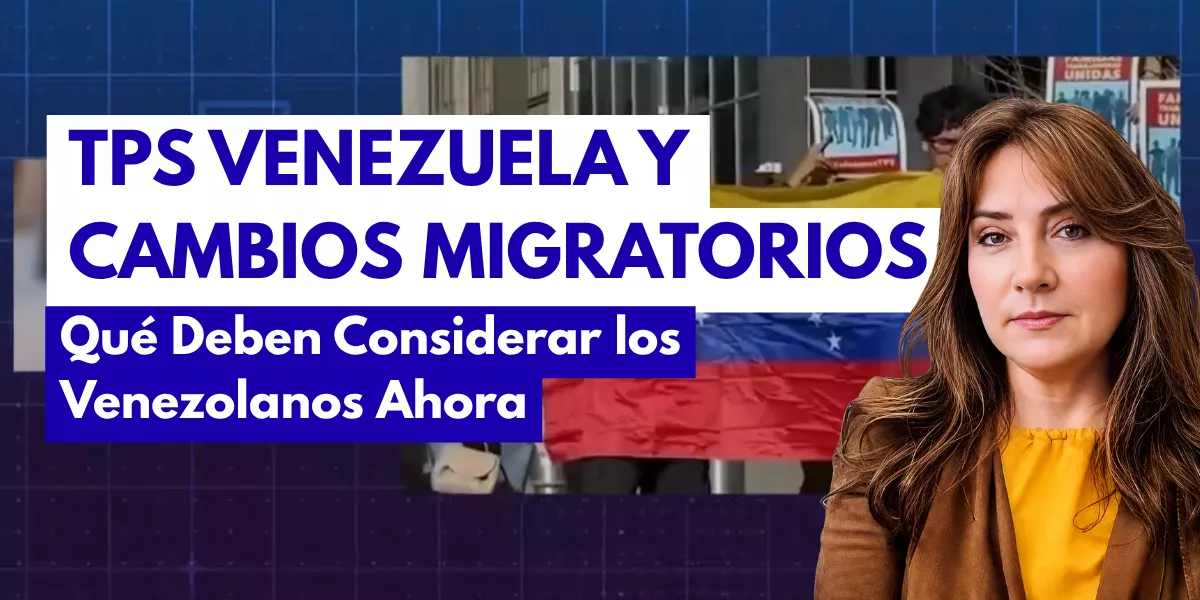
Massachusetts Class Action Lawsuit Challenges Sudden Termination of Humanitarian Parole

In my recent interview with journalist Orián Brito, we addressed an important legal battle now underway in Massachusetts. On August 11, a federal class action lawsuit was filed against the Department of Homeland Security, CBP, and USCIS by the Venezuelan Association of Massachusetts and three individual plaintiffs from Venezuela, Cuba, and Haiti.
The lawsuit seeks to stop the government from abruptly terminating humanitarian parole for those who entered the United States through programs such as CBP One, as well as for those who arrived at the border with parole approval. Many of these individuals still had valid parole for one or two years, along with work permits, and the sudden termination has left them at risk of expedited removal and economic hardship.
If successful, this case could restore parole for thousands, allowing them to continue working and remain in the country lawfully until their original expiration date. The plaintiffs argue that while the government has the authority to end programs, the mass termination violated the Administrative Procedure Act by failing to proceed on a case-by-case basis.
We also discussed recent updates for TPS beneficiaries. In Florida, the Department of Highway Safety and Motor Vehicles is now processing licenses and IDs for TPS holders from Honduras and Nicaragua until November 18, 2025, and for eligible Venezuelans until October 2, 2026, following court rulings and Supreme Court orders. This is a significant step for those who were previously unable to renew their driver’s licenses.
Lastly, I answered a viewer’s question about applying for residency with an existing deportation order. If you are in this situation, you must first reopen your deportation case before being eligible for residency. Be aware that any finding of marriage fraud (INA 204C) results in permanent inadmissibility, which must be fought with strong evidence.
Please stay informed. If you have questions or believe you may be affected by these developments, call my office at (305) 671-0018. I will continue to monitor these cases and share updates as soon as they are available.
Disclaimer: This post is for informational purposes only and does not constitute legal advice. Every case is different; please consult an immigration attorney about your specific situation.
Orian Brito:
Hola, amigos, y lo prometido es deuda, vamos a comenzar con varias informaciones que hoy son noticia. Si usted tiene TPS o le afectó el fin del parole, este programa es para usted. En Florida, por ejemplo, el departamento que emite las licencias ha sido ordenado a reanudar el trámite de licencias e identificaciones para beneficiarios del TPS, específicamente para Honduras y Nicaragua, con documentos vigentes hasta el 18 de noviembre de 2025. En el caso de los venezolanos, con documentos emitidos a más tardar el 5 de febrero de 2025, estos se mantienen válidos mientras sigue el litigio, en muchos casos hasta octubre de 2026.
Vamos a leer el comunicado que me llegó hace minutos más adelante. Miami-Dade ya está atendiendo bajo esta guía y, al mismo tiempo, en Massachusetts, la Asociación Venezolana de Massachusetts junto a tres personas de Venezuela, Cuba y Haití demandaron al Departamento de Seguridad Nacional por la terminación masiva del parole humanitario comunicada por correo en abril.
Invitada hoy, me alegra mucho que esté con nosotros la abogada de inmigración Martha Arias. Vamos a aclarar varios puntos sobre este tema. Los invito a que se queden hasta el final, que se suscriban y que, por supuesto, activen todas las notificaciones. Hay muchas preguntas respecto a lo que ocurrió del día de ayer a hoy. Así que, abogada, gracias por atendernos. No sé si empezar primero por lo del parole, esta demanda que se está haciendo. Personas que ingresaron con parole humanitario o a través de CBP One —que era la aplicación donde la gente llegaba a la frontera, solicitaba una cita, era entrevistada y posteriormente ingresaba al país con el parole— recibieron este correo que decía que se quedaban sin estatus, y ahora están reclamando. La batalla judicial es decisiva para muchos migrantes a esta hora.
Abogada Martha Arias:
Y es correcto, Orián. Bueno, un saludo para usted, gracias por tenerme en su programa. Efectivamente, hay una demanda federal de grupo (class action) que se presentó el 11 de agosto en el estado de Massachusetts en contra del Departamento de Seguridad Nacional (Homeland Security), de CBP y de USCIS. Esta demanda es presentada por la Asociación Venezolana de Massachusetts y también por tres individuos que representan a muchas otras personas en la misma situación.
Esta demanda pide que se revoque —o se emita un vacatur, que es como una revocación— y que se dé un juicio declaratorio o una orden judicial (injunction), es decir, que se detenga la aplicación de esta medida del gobierno de terminar el parole de forma repentina para todas aquellas personas que ingresaron con parole, incluyendo quienes ingresaron por la frontera con la aplicación CBP One.
Orian Brito:
Esta batalla buscaría que ellos recuperen ese estatus.
Abogada Martha Arias:
Es correcto. Que recuperen el estatus y se les devuelva su parole. Recuerde que muchos apenas habían ingresado recientemente y todavía tenían el parole por uno o dos años. Otros podrían continuar con sus solicitudes de asilo, pero parece que la administración, al terminar el parole, está poniendo a estas personas en procesos de deportaciones expeditas o rápidas y no les está permitiendo continuar con sus peticiones de asilo.
Los demandantes consideran que esto afecta enormemente, no solo económicamente a las familias, sino también de forma colateral a la economía del país, porque había personas que ya tenían la seguridad de permanecer temporalmente en Estados Unidos con ese parole y un permiso de trabajo.
Orian Brito:
Perfecto. Importante. Entonces, definir ahora qué va a ocurrir con esta demanda. Me imagino que para el Departamento de Seguridad Nacional su defensa es que tiene la potestad de poner fin a este tipo de programas, que ha sido el argumento que hemos visto: que ellos tienen el derecho de decidir cuándo lo mantienen y cuándo no.
Abogada Martha Arias:
Efectivamente. Una de las razones que aducen los demandantes es que, sí, el gobierno tiene la autoridad de terminarlo, pero que no debería terminarlo en forma masiva como pasó, porque consideran que es una violación a la Ley de Procedimiento Administrativo (Administrative Procedure Act), que regula ciertas conductas administrativas del gobierno.
Los demandantes dicen que esto se podía terminar caso por caso, pero no de la forma masiva en que se hizo. Las personas que entraron desde el 16 de mayo de 2023 hasta el 19 de enero de 2025 con parole son las que están dentro de este grupo.
Orian Brito:
Importante. ¿Cuál sería el mejor mensaje que le podemos dar a las personas que tienen este beneficio y que ahora están a la expectativa de lo que se pueda decidir en medio de la situación que tienen? Porque a muchos les ha llegado, repito, ese correo donde les dicen: “Mejor vete”.
Abogada Martha Arias:
Sí, de hecho el correo está listado, está escrito allí dentro de la demanda. Y una de las cosas que ellos piden es que se detenga esa terminación y que se permita a las personas continuar con su parole por el tiempo que se les había otorgado. También piden que no se haga efectiva la terminación del parole y del permiso de trabajo, para que las personas puedan seguir trabajando el tiempo que les quedaba pendiente.
Mi consejo es que las personas estén atentas a las noticias en caso de que salga una medida cautelar o una decisión. Obviamente, si la decisión es favorable, van a poder continuar con sus permisos de trabajo y con su parole hasta su vencimiento. Si la demanda no se gana, también deben estar atentas, porque esta era una esperanza y, si no se logra, ya no existirá esa posibilidad.
Orian Brito:
Genial. Estamos conversando con la abogada Martha Arias. Hay muchas preguntas respecto al TPS. Ayer compartí algunas y tengo un video con cientos de preguntas, pero seleccioné solo tres que son las que más se repiten. Por ejemplo, Irma Naranjo me dice: “Buen día, Orián, Dios te bendiga. Me preocupa el permiso de trabajo de mi hijo; lo renovó en diciembre y aún no le llega. ¿Qué puedo hacer, por favor?”. Nosotros, dice Irma, tenemos solicitud de asilo desde 2020 y TPS desde 2021. Me preocupa el permiso de trabajo y la licencia de mi hijo.
Abogada Martha Arias:
Es correcto. Muchísimas personas están en esa situación. Aplicaron para el TPS, lo renovaron, solicitaron la renovación de su permiso de trabajo y nunca les llegó la aprobación. Por lo menos, para efectos de la licencia de conducir, mientras muestren que el TPS está pendiente y el permiso de trabajo en trámite, les pueden dar una renovación de licencia, al menos aquí en Florida.
En cuanto al asilo, asumo que la persona ya lo tenía pendiente por más de 180 días, y por eso califica para el permiso de trabajo. Pero es cierto que esta administración se está demorando o no está emitiendo esos permisos. Incluso he visto que a algunas personas les han llegado requerimientos de evidencia solicitando documentos que normalmente no eran comunes. Estos requerimientos los están pidiendo ahora para poder emitir el permiso de trabajo.
Orian Brito:
Una de esas evidencias es una carta, según me dice Héctor, con TPS 2021. Él pudo renovar y, en el caso de la licencia, no tuvo problema. Existen dos cartas publicadas en internet: una para la licencia y otra para empleadores, que se pueden mostrar en caso de que el empleador lo pida. No sé dónde está esa carta; me gustaría que, si él ve este video, la comparta y nos pase el enlace, porque le puede servir a muchas personas en esta situación.
Abogada Martha Arias:
Claro. Las cartas son realmente comunicaciones de USCIS (U.S. Citizenship and Immigration Services), donde se explica que las personas con ciertas solicitudes pendientes pueden mostrarle al empleador que, si el permiso de trabajo ya está en proceso de renovación y está pendiente, igual pueden seguir trabajando porque existe una extensión automática del permiso.
Orian Brito:
Importante eso. Voy a leer rápidamente respecto a las licencias. Este correo me llegó de la oficina del Tax Collector de Miami-Dade a las 4:15 de la tarde. Es un correo a la prensa al que tenemos acceso los periodistas. En este correo presentan dos memorandum, y uno tiene que ver con el TPS para los venezolanos.
El documento, con fecha 12 de agosto de 2025, indica que el Departamento de Seguridad Vial y Vehículos Motorizados de Florida ha emitido una guía actualizada que ordena la reanudación del procesamiento de licencias de conducir y tarjetas de identificación estatales para beneficiarios elegibles del TPS, tras recientes fallos de tribunales federales que extendieron el TPS para nacionales de Honduras, Nicaragua y Venezuela.
Las personas de Honduras y Nicaragua con documentación válida de TPS son elegibles para recibir servicios hasta el 18 de noviembre de 2025. Para los nacionales de Venezuela, la Corte Suprema de Estados Unidos ha ordenado que, mientras se resuelve el litigio en curso, los beneficiarios que hayan recibido cierta documentación relacionada con el TPS el 5 de febrero de este año o antes mantendrán su TPS y su documentación seguirá siendo válida hasta que concluya el litigio. Estos beneficiarios tienen derecho a recibir una licencia de conducir o tarjeta de identificación hasta el 2 de octubre de 2026.
Abogada Martha Arias:
¡Buenísimo! Ese comunicado de prensa, Orián, es excelente. Se lo voy a hacer llegar y compartir, no solo con mis colegas, sino también con mis clientes. Sé que la decisión de extender la posibilidad de obtener licencia para los TPS de Honduras y Nicaragua es un beneficio obtenido a raíz de una demanda presentada en California, en la que un juez ordenó el restablecimiento de este TPS al menos hasta noviembre, cuando habrá una nueva audiencia.
En cuanto al TPS de Venezuela, esto continúa en litigio, pero es muy buena noticia porque no estaban renovando las licencias de conducir a los TPS venezolanos del 2023. Ya sabemos que el TPS 2021, que estaba vigente hasta septiembre, ahora tiene esta extensión.
Orian Brito:
Qué bueno, y ojalá alguien que esté en sintonía lo pueda compartir con otros, así se tranquilizan y pueden sacar sus licencias según lo que dice este documento. Ya se lo mandé por correo apenas lo terminé de leer porque lo tenía allí. Cualquier cosa, al finalizar me avisa y se lo reenvío, y cualquier otra información que salga.
Concluyo con esta pregunta que me ha hecho una seguidora. Dice que se casó con un cubano, en la entrevista no le fue bien, se llama Ana, vive en Orlando. No les fue bien y se mudaron de la dirección donde estaban. Su hija ya es ciudadana estadounidense y decidió pedirla. Resulta que cuando fue a solicitarla se dio cuenta que tenía una orden de deportación. Ella tiene actualmente TPS, por cierto, y la pregunta es si debe ir a la corte para remover esa deportación para poder solicitar la residencia, o qué se hace en estos casos, cuando pides la residencia por matrimonio o por un hijo ciudadano.
Abogada Martha Arias:
Bueno, esto es más profundo de lo que parece en la pregunta.
Orian Brito:
Pueden llamar a la abogada Martha Arias para que tome cartas en el asunto.
Abogada Martha Arias:
Le explico rápidamente: cuando a una persona le niegan una petición de residencia, puede ser enviada o referida a un juez de inmigración. Aparentemente esto fue lo que le pudo haber pasado a esta señora.
En ese caso, para poder tener una nueva petición o recibir la residencia, el hijo la puede pedir, pero ella tiene que reabrir el caso de deportación, porque no se le puede otorgar la residencia a alguien que tiene una orden de deportación. Hay que reabrir el caso para ser elegible.
Eso es lo más simple. Lo más complicado es que hay una causal de inadmisibilidad bajo el Estatuto de Inmigración que se llama la 204C. Es una inadmisibilidad permanente, es decir, no importa si pasan diez, cincuenta o doscientos años: la persona seguirá siendo inelegible si se determina que cometió fraude matrimonial, es decir, que se casó solo para obtener un beneficio migratorio.
Si inmigración acusa o confirma que hubo fraude matrimonial, cualquier petición posterior será negada por esta inadmisibilidad 204C de por vida. En ese caso, la persona tendría que pelear y probar que no hubo fraude matrimonial, con evidencia. No es fácil quitarse una 204C.
Orian Brito:
Pero se puede luchar, si usted tiene la certeza de que su matrimonio fue real.
Abogada Martha Arias:
Exacto. Si tiene la certeza de que se casó de verdad, que tiene evidencia, y que simplemente le fue mal en la entrevista —porque a veces las personas no contestan igual y hay contradicciones— eso no significa que el matrimonio sea falso.
Le doy un ejemplo: tuve una pareja hace tiempo que, a simple vista, no parecían muy compatibles físicamente. Ella era muy alta y corpulenta, y él era bajito y delgado. Vivían juntos y se querían, pero en la entrevista contestaban totalmente distinto. Ella decía “blanco” y él “negro, azul o gris”.
Les negaron la residencia diciendo que había fraude. Ellos llegaron a mi oficina riéndose, diciendo “¿fraude? si esto es verdad”. Revisé su evidencia y tenían bastante. Apelamos, mostramos más pruebas, tuvieron una segunda entrevista y gracias a Dios se la aprobaron, pero fue una lucha.
En una de las preguntas les pidieron: “¿Cómo se conocieron?”. Ella contestó “en la puerta de Publix” y él dijo “nos presentó una amiga”. Los dos tenían razón, porque se conocieron en la puerta del supermercado gracias a una amiga en común. El problema es que uno respondió “dónde” y el otro “cómo”, y eso generó contradicción.
Otra pregunta fue: “¿Cuál es el plato favorito de su esposo?”. Ella dijo “espagueti” y él contestó “a mí no me gusta el espagueti… pero es lo único bueno que tú cocinas”. Para ella, ese era su plato favorito porque le gustaba cómo lo hacía ella, aunque él decía que no le gustaba.
Así fue toda la entrevista: cómica, pero complicada.
Conclusión: no basta con explicar las diferencias en las respuestas, hay que aportar evidencia de la relación. Si no hay pruebas suficientes, es muy difícil ganar un caso de 204C.
Orian Brito:
Bueno, cualquier duda sobre este y otros temas pueden llamar a la abogada de inmigración Martha Arias. Por favor, recuérdenos su número.
Abogada Martha Arias:
Claro, 305-671-0018.
Orian Brito:
305-671-0018, la abogada de inmigración Martha Arias, muy conocida en los medios del sur de la Florida. Gracias por su tiempo. Espero que esta información brinde tranquilidad y claridad a los beneficiarios del TPS y a quienes esperan una decisión positiva sobre el parole. Seguiremos en contacto por cualquier cambio migratorio. Dejen sus preguntas y comentarios.
Abogada Martha Arias:
Gracias a ustedes.
Orian Brito:
Gracias, muchas gracias.
Orian Brito:
Hello, friends, and as promised, we are going to begin with several pieces of information that are news today. If you have TPS or were affected by the end of parole, this program is for you. In Florida, for example, the department that issues licenses has been ordered to resume processing licenses and IDs for TPS beneficiaries, specifically for Honduras and Nicaragua, with documents valid until November 18, 2025. In the case of Venezuelans, with documents issued no later than February 5, 2025, these remain valid while litigation continues, in many cases until October 2026.
We will read the statement that arrived to me just minutes ago a little later. Miami-Dade is already assisting under this guidance, and at the same time, in Massachusetts, the Venezuelan Association of Massachusetts together with three people from Venezuela, Cuba, and Haiti sued the Department of Homeland Security over the mass termination of humanitarian parole communicated by mail in April.
My guest today, I am very glad to have with us immigration attorney Martha Arias. We are going to clarify several points on this topic. I invite you to stay until the end, to subscribe, and of course, to activate all notifications. There are many questions regarding what happened from yesterday to today. So, attorney, thank you for joining us. I’m not sure if we should start first with the parole matter, this lawsuit being filed. People who entered with humanitarian parole or through CBP One — which was the application where people would arrive at the border, request an appointment, be interviewed, and later enter the country with parole — received this email saying they were losing their status, and now they are making a claim. The legal battle is decisive for many migrants at this hour.
Attorney Martha Arias:
And that’s correct, Orián. Well, greetings to you, thank you for having me on your program. Indeed, there is a federal class action lawsuit that was filed on August 11 in the state of Massachusetts against the Department of Homeland Security, CBP, and USCIS. This lawsuit is filed by the Venezuelan Association of Massachusetts and also by three individuals who are representing many other people in the same situation.
This lawsuit requests that there be a revocation — or a vacatur, which is like a revocation — and that a declaratory judgment or an injunction be issued, that is, to stop the application of this government measure to end parole so suddenly for all those who entered with parole, including those who entered at the border using the CBP One application.
Orian Brito:
This battle would seek for them to recover that status.
Attorney Martha Arias:
That’s correct. That they recover the status and have their parole returned to them. Remember that many had just recently entered and still had parole for one or two years. Others could continue with their asylum applications, but it seems that the administration, by ending parole, is placing these people in expedited or fast-track deportations and is not allowing them to continue with their asylum petitions.
The plaintiffs consider that this greatly affects families economically, and also collaterally affects the country’s economy, because there were people who already had the security of at least staying temporarily in the United States with that parole and a work permit.
Orian Brito:
Perfect. Important. Then, defining now what will happen with this lawsuit — I imagine that for the Department of Homeland Security, their defense is that they have the authority to end this type of program, which has been the argument we have seen: that they have the right to decide when they maintain it and when they do not.
Attorney Martha Arias:
Indeed. One of the reasons cited by the plaintiffs is that yes, the government has the authority to end it, but that it should not end it in a massive way, as happened, because they consider this a violation of the Administrative Procedure Act, which regulates certain administrative conduct by the government.
The plaintiffs say that it could be ended case by case, but not in the massive way in which it was done. The people who entered from May 16, 2023, until January 19, 2025, with parole are the ones who are within this group.
Orian Brito:
Important. What would be the best message we can give to people who have this benefit and are now awaiting what may be decided in the middle of the situation they are in? Because many have received, I repeat, that email telling them, “Better leave.”
Attorney Martha Arias:
Yes, in fact the email is listed, it is written there in the lawsuit. And one of the things they are asking is that this termination be stopped and that people be allowed to continue with their parole for the time it was granted to them. They also ask that the termination of parole and the work permit not be enforced, so that people can continue working for the time they had pending.
My advice is for people to stay alert to the news in case a preliminary injunction or a decision comes out. Obviously, if the decision is favorable, they will be able to continue with their work permits and with their parole until it expires. If the lawsuit is not won, they should also stay alert, because this was a hope, and if it is not achieved, that possibility will no longer exist.
Orian Brito:
Great. We are speaking with attorney Martha Arias. There are many questions regarding TPS. Yesterday I shared some and I have a video with hundreds of questions, but I chose only three that are the most repeated. For example, Irma Naranjo says to me: “Good morning, Orián, God bless you. I am worried about my son’s work permit; he renewed it in December and it still hasn’t arrived. What can I do, please?” She says, “We have an asylum application from 2020 and TPS from 2021. I am worried about my son’s work permit and his license.”
Attorney Martha Arias:
That’s correct. Many people are in that situation. They applied for TPS, renewed it, applied for the renewal of their work permit, and never received approval. At least for purposes of the driver’s license, while they show that TPS is pending and the work permit is in process, they can be given a license renewal, at least here in Florida.
Regarding asylum, I assume the person already had it pending for more than 180 days, and that is why they qualify for the work permit. But it is true that this administration is taking a long time or not issuing those permits. In fact, I have seen some people receive requests for evidence asking for documents that normally were not common. These requests are now being made in order to issue the work permit.
Orian Brito:
One of those pieces of evidence is a letter, according to what Héctor tells me, with TPS 2021. He was able to renew, and in the case of the license, he had no problem. There are two letters published on the internet: one for the license and one for employers, which can be shown in case the employer asks for it. I don’t know where this letter is; I would like that, if he sees this video, he shares it and sends the link, because it could help many people in this situation.
Attorney Martha Arias:
Of course. The letters are actually communications from USCIS (U.S. Citizenship and Immigration Services), where they explain that people with certain pending applications can show the employer that if the work permit is already in the renewal process and is pending, they can still continue working because there is an automatic extension of the work permit.
Orian Brito:
That is important. I am going to quickly read about the licenses. This email came to me from the Miami-Dade Tax Collector’s Office at 4:15 in the afternoon. It is an email to the press that we journalists have access to. In this email they present two memorandums, and one has to do with TPS for Venezuelans.
The document, dated August 12, 2025, states that the Florida Department of Highway Safety and Motor Vehicles has issued updated guidance ordering the resumption of processing driver’s licenses and state ID cards for eligible TPS beneficiaries, following recent federal court rulings that extended TPS for nationals of Honduras, Nicaragua, and Venezuela.
People from Honduras and Nicaragua with valid TPS documentation are eligible to receive services until November 18, 2025. For nationals of Venezuela, the U.S. Supreme Court has ordered that while the ongoing litigation is resolved, beneficiaries who have received certain TPS-related documentation on or before February 5 of this year will keep their TPS and their documentation will remain valid until the litigation concludes. These beneficiaries have the right to receive a driver’s license or ID card until October 2, 2026.
Attorney Martha Arias:
Excellent! That press release, Orián, is excellent. I am going to send it to you and share it, not only with my colleagues but also with my clients. I know that the decision to extend the possibility of obtaining a license for TPS holders from Honduras and Nicaragua is a benefit obtained as a result of a lawsuit filed in California, in which a judge ordered the reinstatement of this TPS at least until November, when there will be a new hearing.
Regarding TPS for Venezuela, this litigation continues, but it is very good news because they were not renewing driver’s licenses for Venezuelan TPS holders from 2023. Now we know that TPS 2021, which was valid until September, now has this extension.
Orian Brito:
That’s good, and hopefully someone who is tuned in can share it with others, so they can feel calm and get their licenses according to what this document says. I already sent it by email as soon as I finished reading it because I had it there. If needed, at the end let me know and I will resend it, along with any other information.
I finish with this question from a follower. She says she married a Cuban, in the interview it didn’t go well. Her name is Ana, she lives in Orlando. It didn’t go well, and they moved from the address where they were living. Her daughter is already a U.S. citizen and decided to petition for her. When she went to apply, she realized she had a deportation order. She currently has TPS, by the way, and the question is if she should go to court to remove that deportation in order to apply for residency, or what is done in these cases, when you apply for residency through marriage or through a U.S. citizen child.
Attorney Martha Arias:
Well, this is deeper than it may seem in the question.
Orian Brito:
You can call attorney Martha Arias so she can take action on the matter.
Attorney Martha Arias:
I will explain quickly: when a person is denied a residency petition, they can be sent or referred to an immigration judge. Apparently, this is what could have happened to this lady.
In that case, to be able to have a new petition or receive residency, the child can petition for her, but she must reopen the deportation case, because a person with a deportation order cannot be granted residency. The case must be reopened to be eligible.
That is the simplest part. The most complicated part is that there is a ground of inadmissibility under the Immigration Statute called 204C. It is a permanent inadmissibility, meaning it doesn’t matter if ten, fifty, or two hundred years pass: the person will remain ineligible if it is determined that they committed marriage fraud, meaning they married solely to obtain an immigration benefit.
If immigration accuses or confirms that there was marriage fraud, any subsequent petition will be denied because of this lifetime 204C inadmissibility. In that case, the person must fight and prove that there was no marriage fraud, with evidence. It is not easy to remove a 204C.
Orian Brito:
But it can be fought, if you are certain your marriage was real.
Attorney Martha Arias:
Exactly. If you are certain you married for real, that you have evidence, and that you simply did poorly in the interview — because sometimes people do not answer the same way and there are contradictions — that does not mean the marriage is false.
I’ll give an example: I had a couple some time ago who, at first glance, didn’t look very compatible physically. She was very tall and large, and he was short and slim. They lived together and loved each other, but in the interview they answered totally differently. She would say “white” and he “black, blue, or gray.”
They were denied residency saying there was fraud. They came to my office laughing, saying “fraud? this is real.” I reviewed their evidence, and they had plenty. We appealed, showed more proof, had a second interview, and thank God it was approved, but it was a fight.
In one of the questions they were asked: “How did you meet?” She answered “at the door of Publix” and he said “a friend introduced us.” Both were right, because they met at the supermarket door thanks to a mutual friend. The problem was that one answered “where” and the other “how,” and that created a contradiction.
Another question was: “What is your husband’s favorite dish?” She said “spaghetti” and he replied “I don’t like spaghetti… but it’s the only thing you cook well.” For her, that was his favorite dish because he liked the way she made it, although he said he didn’t like it.
That’s how the entire interview went: funny, but complicated.
Conclusion: it is not enough to explain the differences in answers, you must provide evidence of the relationship. If there is not enough proof, it is very difficult to win a 204C case.
Orian Brito:
Well, any doubt about this and other topics, you can call immigration attorney Martha Arias. Please remind us of your phone number.
Attorney Martha Arias:
Of course, 305-671-0018.
Orian Brito:
305-671-0018, immigration attorney Martha Arias, very well-known in the South Florida media. Thank you for your time. I hope this information brings peace of mind and clarity to TPS beneficiaries and to those waiting for a positive decision on parole. We will remain in contact for any immigration changes. Leave your questions and comments.
Attorney Martha Arias:
Thank you to you all.
Orian Brito:
Thank you, thank you very much.